
Cursos
- Trainer/in: Oliver Görke
- Trainer/in: Aleksander Gurlo
- Trainer/in: Oliver Görke
- Trainer/in: Aleksander Gurlo
- Trainer/in: Peter Kraus
- Trainer/in: Andreas Strasser
Die Veranstaltung behandelt relevante theoretische und praktische Grundlagen und aktuelle technische
Herausforderungen für Glaswerkstoffe, und ihre Potential als Konstruktionswerkstoff. Gläser finden
Verwendung als Bauwerkstoffe, optische und strukturelle Funktionsmaterialien. Kenntnisse über
Herstellungsprozesse, chemische Zusammensetzung und Handhabung ausgewählter Glaswerkstoffe sind
notwendig für die Anwendung von Gläsern in vielen Gebieten.
- Trainer/in: Oliver Görke
Introduction to the fundamental physical, chemical and material science as well as to the synthesis and fabrication methods of ceramic materials for the following applications:
-Energy Conversion and Storage: Batteries, Thermoelectrics, Supercapacitors
-Ceramics for the Hydrogen Economy: Catalysts, Membranes, Storage Materials, Photocatalysts and Materials for Fuel Cells
-Porous Ceramics for Catalysis and Membrane Technology
- Trainer/in: Maged Bekheet
- Trainer/in: Oliver Görke
- Trainer/in: Aleksander Gurlo
- Trainer/in: Delf Kober
- Trainer/in: Ulla Simon
Die Veranstaltung gibt eine Einführung in Fragestellungen zu Energieumwandlung und –speicherung. Die Funktionsprinzipien von Energieumwandlungs- und speicherungsgeräten werden erläutert. Die Veranstaltung konzentriert sich auf Lithium-Ionen-Batterien, Photovoltaik, Thermoelektrika und Brennstoffzellen.
- In this course the students will:
- develop a deep understanding of requirements for ceramic materials for energy applications,
- understand and present a structure-property relationship
- know, understand and explain different methods for the synthesis, processing and characterization of ceramic materials for energy applications.
- Trainer/in: Anne-Claude Amtsfeld
- Trainer/in: Maged Bekheet
- Trainer/in: Oliver Görke
- Trainer/in: Aleksander Gurlo
- Trainer/in: Delf Kober
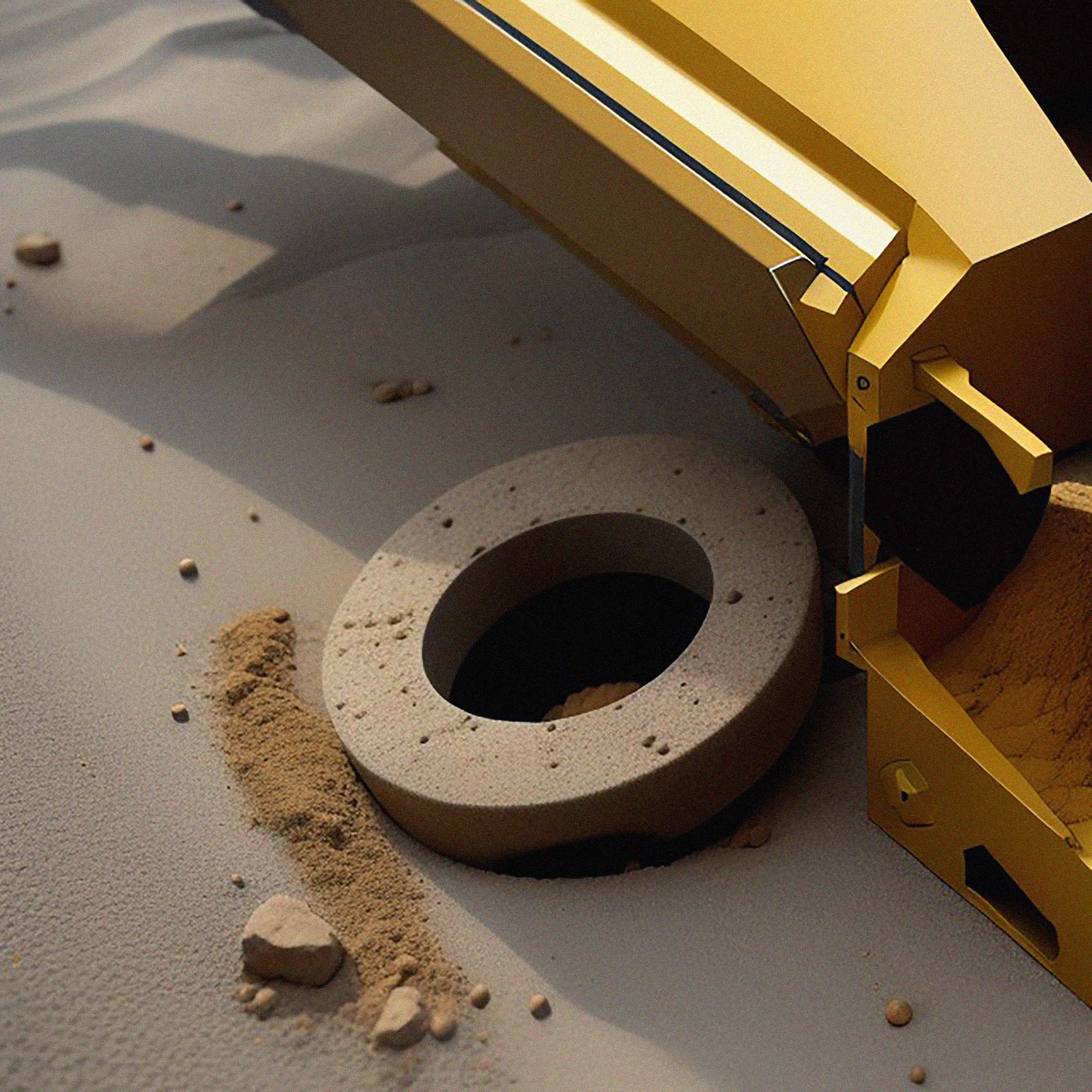
This course covers the fundamentals of the rapidly developing field of Additive Manufacturing (AM) in Space, on the Moon and Mars. It will consider two basic feedstock approaches for Off-Earth production: (i) AM with Earth-based raw materials in Space and (ii) Off-Earth sourced feedstocks from various celestial bodies (the Moon, Mars, and Asteroids) - an approach that is called Space Resource Utilization (SRU). Major sections of the course will focus on the SRU feedstock approach, discussing specifically regolith (and water), including a summary of their genesis, availability and relevant properties for AM. After briefly introducing/reiterating the seven ISO/ASTM AM process categories, coursework will discuss the impact of gravity, vacuum/low pressure, and temperature on Off-Earth AM in Space, as well as introduce various mitigation approaches to overcome such challenges. The module covers the application of raw regolith in AM, with an emphasis on ceramic AM techniques. Additionally, the course reviews current AM techniques using regolith simulants, as reported in the literature. Scientific aspects of powder technology and colloidal science for regolith processing are introduced, along with methods for refining SRU feedstocks. Finally, the course explores future concepts and advanced techniques for AM using highly processed SRU feedstocks.
- Trainer/in: David Karl
- Trainer/in: Ruben David Lennart Prause
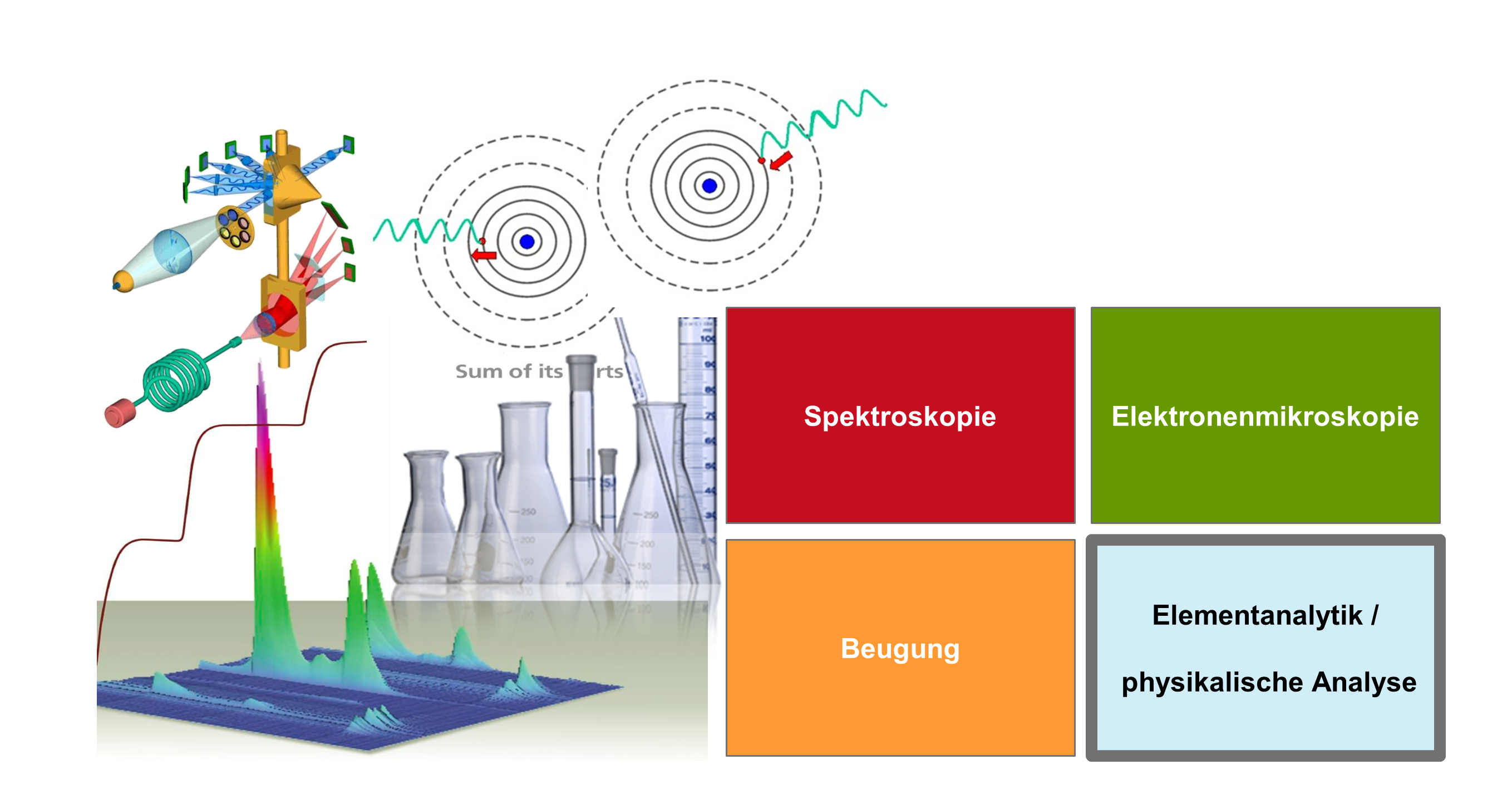
In der Vorlesung „Grundlagen der Materialcharakterisierung“ werden folgenden Themen/Methoden behandelt:
- Pulverdiffraktometrie.
- Grundlagen der Phasenbestimmung und -analyse.
- Mikroskopie: Lichtmikroskopie, SEM und TEM.
- Röntgenabsorption und -emission: EDX, WDX, XRF, XPS.
- Spektroskopie: FTIR, Raman, UV-VIS, AAS, MS.
- Chemische Zusammensetzung: MS, TGHE, ICP, AAS, EDX.
- Thermische Analyse: TG, DSC, DTA.
- Kalorimetrie.
- Trainer/in: Zeynep Alici
- Trainer/in: Tobias Bertz
- Trainer/in: Isabella Gallino
- Trainer/in: Oliver Görke
- Trainer/in: Aleksander Gurlo
- Trainer/in: Delf Kober
- Trainer/in: Nina Maria Liebs
- Trainer/in: Christina Lu
- Trainer/in: Klara Otto
- Trainer/in: Zahra Sherazi
- Trainer/in: Maria Stephanie Wolff
- Trainer/in: Zeynep Alici
- Trainer/in: Anne-Claude Amtsfeld
- Trainer/in: Alexander Büchner
- Trainer/in: Oliver Görke
- Trainer/in: Aleksander Gurlo
- Trainer/in: Christina Lu
- Trainer/in: Julia Meister
- Trainer/in: Zahra Sherazi
- Trainer/in: Maria Stephanie Wolff