
Kursunterbereiche
Kurse
- Trainer/in: Oliver Görke
- Trainer/in: Aleksander Gurlo
- Trainer/in: Christopher Darius Kleinig
- Trainer/in: Julia Meister
This semester, we will offer the IV "Porous ceramics for catalysis and membrane technology(3ECTS)" without a lab course.
The IV teaches the processing, characterization and application of porous ceramics and membranes. Students are introduced to methods for the synthesis/processing of micro-, meso- and macroporous oxides and carbon materials. Appropriate characterization methods for determining the pore properties are covered and practical application examples for use in catalysis and membrane technology are shown.
- Trainer/in: Cekdar Vakif Ahmetoglu
- Trainer/in: Oliver Görke
- Trainer/in: Aleksander Gurlo
- Trainer/in: Julia Meister
- Trainer/in: Ulla Simon
Please do not attempt to self-enrol in this course.
This ISIS course is part of "[SoSe 2026] Introduction to Additive Manufacturing (3D Printing) - Processes". Students will be admitted by the lecturer only after self-enrolling into the "[SoSe 2026] Introduction to Additive Manufacturing (3D Printing) - Processes" mother course.
- Trainer/in: Zeynep Alici
- Trainer/in: David Karl
- Trainer/in: Christina Lu
- Trainer/in: Ruben David Lennart Prause
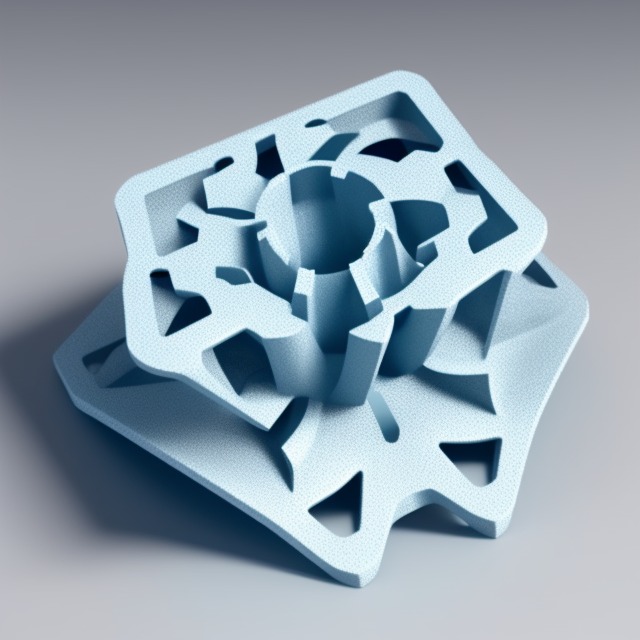
The course gives a general introduction to Additive Manufacturing (AM), also known as 3D Printing, with a clear focus on how AM processes operate and what defines each process category. The module explains how components are built layer by layer across different technologies, outlining the core mechanisms that drive each process and the factors that influence precision, resolution, build speed, and overall process capability.
The content also covers typical process-related challenges, such as accuracy limits, support strategies, thermal effects, and surface quality. Students learn how AM processes differ in principle, performance, and applicability.
Coursework will emphasise the AM processes themselves, their operating principles, key parameters, comparative characteristics, and hands-on understanding of all major AM technologies:
(I) Vat photopolymerization (VPP): Stereolithography (SLA), Digital Light Processing (DLP), Continuous Liquid Interface Production (CLIP), Volumetric Additive Manufacturing (VAM), Two-Photon Polymerization (2PP)
(II) Material jetting (MJT): PolyJet, NanoParticle Jetting (NPJ)
(III) Binder jetting (BJT): Powder-based 3D Printing (3DP), Metal Binder Jetting
(IV) Powder bed fusion (PBF): Laser Sintering (LS), Multi Jet Fusion (MJF), Selective Laser Melting (SLM), Electron Beam Melting (EBM)
(V) Material extrusion (MEX): Fused Deposition Modelling (FDM), Robocasting / Direct Ink Writing (DIW)
(VI) Directed energy deposition (DED): Directed Laser Deposition (DLD), Laser Engineering Net Shape (LENS)
(VII) Sheet lamination (SHL): Laminated Object Manufacturing (LOM), Ultrasonic Additive Manufacturing (UAM)
A complementary course, ‘Introduction to Additive Manufacturing (3D Printing) – Design and Materials’ will be offered in each winter semester. The combination of both modules provides a comprehensive understanding of the most relevant aspects of additive manufacturing (3D printing): processes, design and materials.
- Trainer/in: Christian Haase
- Trainer/in: David Karl
- Trainer/in: Ruben David Lennart Prause
- Trainer/in: Ahmet Turnali
- Trainer/in: Oliver Görke
- Trainer/in: Aleksander Gurlo
- Trainer/in: Julia Meister
-
The main topic will be the Rietveld-refinement, i.e. the improvement of structure solutions from powder data. Theoretical and practical aspects will be discussed. The students will measure XRD pattern of some samples and refine the data. In addition, further aspects of powder diffraction like structure parameters determination, phase analysis, texture determination, crystallite size determination, preferred orientation analysis and residual stress measurement will be treated.
-
The course is a block course for one week and it will take place from 25.08 and 29.08.25 at 10:00-14:00 in BA 316. For more information and registrations, please contact Dr. Bekheet (bekheet@tu-berlin.de)
- Trainer/in: Maged Bekheet
- Trainer/in: Oliver Görke
- Trainer/in: Aleksander Gurlo
- Trainer/in: Julia Meister
- Trainer/in: Oliver Görke
- Trainer/in: Aleksander Gurlo
- Trainer/in: Julia Meister
- Trainer/in: Cekdar Vakif Ahmetoglu
- Trainer/in: Oliver Görke
- Trainer/in: Aleksander Gurlo
- Trainer/in: Julia Meister
- Trainer/in: Ferris Stümpel
Im Teil „Einführung in die Werkstoffwissenschaften“ sollen die Studenten Grundlagen in Aufbau, Herstellung, Anwendung und Prüfung von Werkstoffen erhalten. Dabei werden folgende Themen behandelt:
- Grundlegender Aufbau verschiedener Werkstoffsysteme vom Atom bis zum Bauteil
- Konstitution, Phasen und Stabilität, Grundbegriffe im Umgang mit Materialien
- Werkstoffklassen: Metalle, Keramiken und Gläser, Kunststoffe, Verbundwerkstoffe und Schichten
- Wesentliche physikalisch-chemische Eigenschaften mit dem Schwerpunkt auf mechanischen Kennwerten der Prüftechnik und Normung
- Grundprinzipien der Werkstoffauswahl an praxisrelevanten Beispielen
- Trainer/in: Oliver Görke
- Trainer/in: Aleksander Gurlo
- Trainer/in: Christopher Darius Kleinig
- Trainer/in: Jiashuai Li
- Trainer/in: Christina Lu
- Trainer/in: Julia Meister
- Trainer/in: Zahra Sherazi
- Trainer/in: Ferris Stümpel
- Trainer/in: Maria Stephanie Wolff
- Trainer/in ohne Editorrecht: Zeynep Alici
- Trainer/in ohne Editorrecht: Henning Meyer