
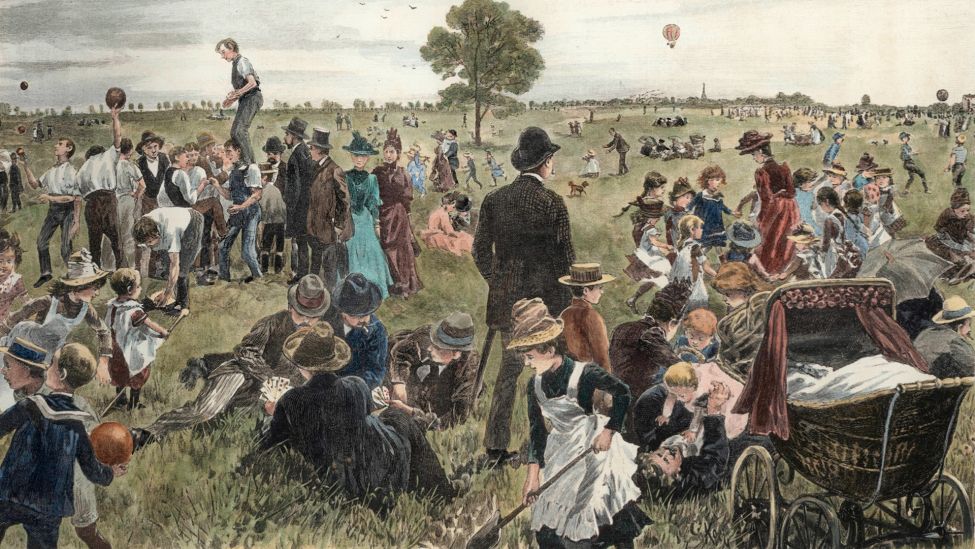
Once again, the future of the Tempelhofer Feld is back in Berlin’s urban and political debate, as this important freiraum is being considered a building resource in face of the current housing crisis.
In support of, and in collaboration with, Architects for Tempelhof (A4THF) we believe that alternative solutions can be found outside the field, to meet housing needs through adaptive reuse of the existing building stock, without consuming more precious soils, which are capable of infiltrating water, cooling the air, growing food, storing carbon, and supporting biodiversity and people’s wellbeing. In alliance with the current Bauwende dynamic, our design studio thus explores an urban ecological approach to how not to build in the Tempelhofer Feld. The studio aims to bring qualitative and quantitative arguments to demonstrate the socio-ecological values of the former airport field, as one of the monumental and vibrant unbuilt open spaces that give Berlin its precious urban landscape identity, especially in the face of climate change and more-than-human health challenges.
Students are invited to interact with local actors and citizens, activists and stakeholders, urban ecologists and climate scientists, by participating in public events and a collective publication, in order to bring their position(s) to the current societal debate. Initiated by fieldwork, consolidated by a series of hand-on workshops with experts and further developed by teamwork, the semester will pursue 3 main didactic trajectories:
a) Why not to build? By imagining and modeling data-based future scenarios for Berlin, students will explore the potential role of THF in the face of climate and environmental changes.
b) How not to build? By investigating cases in the history of citizen activism and environmental planning, then developing their own design strategies, student will question the agency of architects and urban designers beyond building.
c) Where not to build? By acquiring advanced mapping and spatial analysis tools, students will situate THF in larger territorial systems and visions.
- Trainer/in: Aniella Sophie Goldinger
- Trainer/in: Antoine Vialle
- Trainer/in: Michel Zalis