
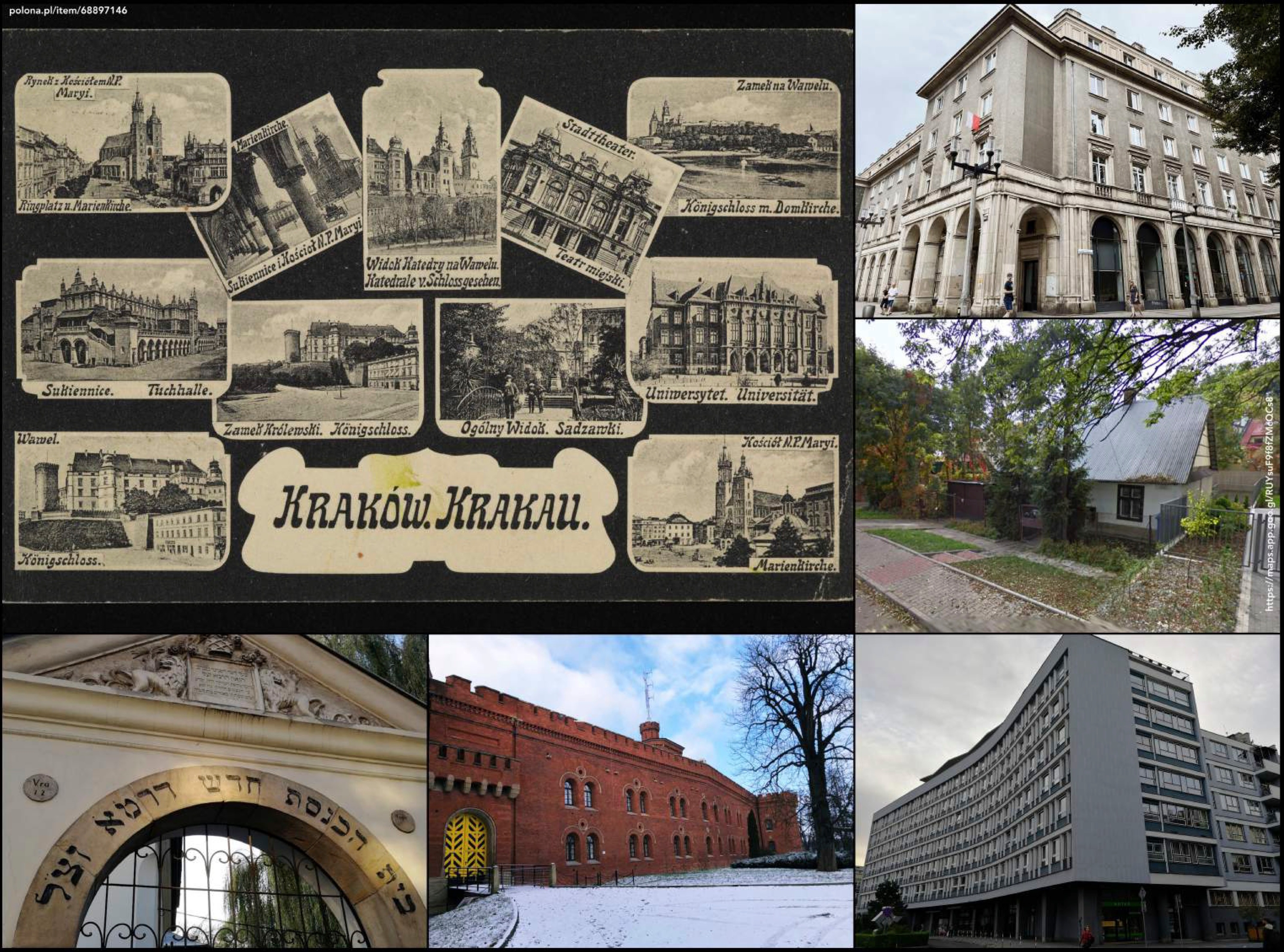
Kraków (Cracow, Krakau) served as the capital of Poland for over five centuries and continued to be the site of royal coronations and burials for the following three hundred years. In the 19th century, it played a pivotal role as the "spiritual" capital of the then non-existent Polish state. On the outskirts of Kraków, the first socialist city in Poland, Nowa Huta, was established and later incorporated into the city's borders. Unlike Warsaw, Kraków emerged from the Second World War almost completely unscathed. In 1978, the city was inscribed on the UNESCO World Heritage List, and in 2000, it was designated one of the European Capitals of Culture. Today, it is the second-largest city in Poland and a prime tourist destination in the country.
Kraków's complex history, its direct ties to Poland's national history, and its reflection of broader European trends make it an excellent case study for examining topics such as historic urbanism, socialist cities, heritage, tourism, city branding, and nationalism. This course provides a theoretical foundation for an excursion to Kraków in March 2025.
This seminar is intended for first-semester students of the Center for Metropolitan Studies. All other students who wish to attend are kindly requested to contact the lecturer via email (piotr.kisiel@campus.tu-berlin.de) before enrolling.
- Trainer/in: Piotr Kisiel