
Courses
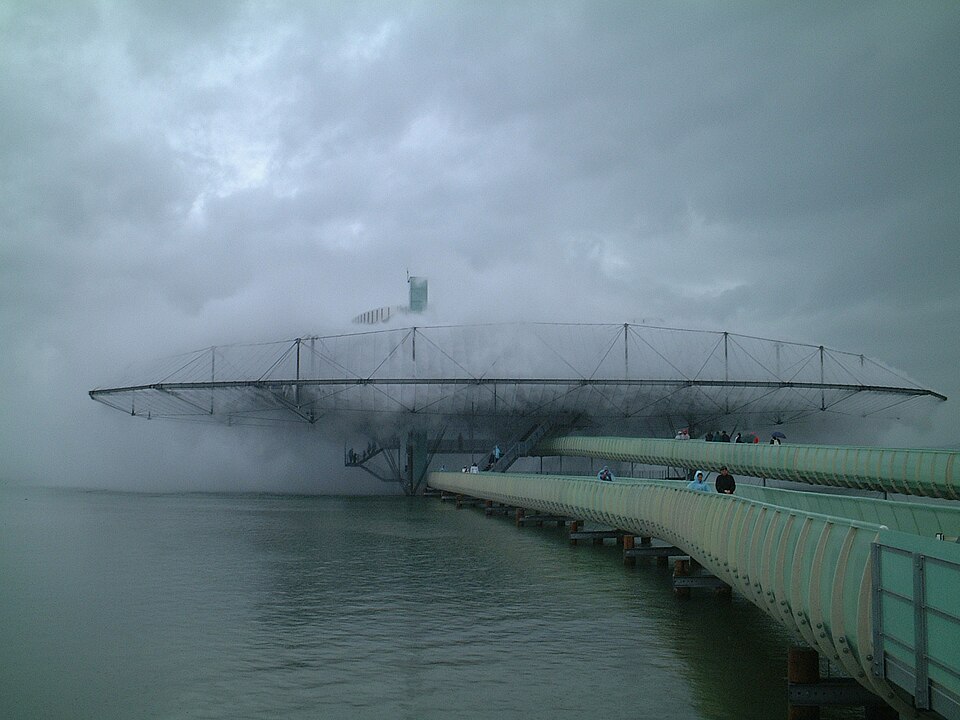
This seminar offers a critical re-examination of tectonic thinking in architecture, positioning it as a dynamic field of theoretical inquiry and practical relevance from the late 20th century to the present day. While the concept of Tectonics holds ancient etymological roots, it gained prominence in architectural discourse through 19th-century German thinkers. It later reappeared critically in the mid-20th century as a counterpoint to the surface-driven aesthetic of Post-Modernism. A prominent example of this phenomenon is represented by British architectural historian Kenneth Frampton's seminal work, Studies in Tectonic Culture of 1995. In this regard, the course primarily will analyze Frampton's argument for "poetics of construction" and his call for the architectural profession to return to its fundamental domain of construction and detail. Moving beyond Frampton's historical and aesthetic framework, the seminar will explore the evolution of tectonic thinking over the past three decades (1995-2025). The critical perspective will be towards repositioning Tectonics not as a purely aesthetic category, but as a site of struggle situated at the intersection of technology, power relations, and socio-environmental responsibility. Therefore, students will critically engage with contemporary challenges—such as digital fabrication, sustainability, and global construction practices—to construct a new, relevant critical theory of tectonic thinking for the 21st century.
- Trainer/in: Jörg Gleiter
- Trainer/in: Aline Schulze
- Trainer/in: Ozan Soya
Modernism(s) within Mondernity
The term “modernism” – as a concept or subject of art history or architectural theory – embodies heterogeneous developments and historiographies. It therefore seems justified to speak of modernism in the plural, i.e., “modernisms.” However, today’s professional and, above all, interdisciplinary social debates emphasize critical engagement and ambivalences, especially with regard to the global North and South.
However, the perception of a transnational genesis in Europe, and even more so in Central Europe, has long been shaped by a dichotomy between East and West and between “peripheries and centers.” From a historiographical perspective in particular, modernism is characterized by ruptures and diversities. This contrasts with the general opinion, which tends to think in terms of “successive epochs,” culminating in “postmodernism.”
The seminar—the first in a series—begins with the question “What is modernism?” It is based on lesser-known and supposedly well-known approaches from an international perspective. It asks how an understanding of modernism can be made productive for the critical design of architecture. The seminar will be closely linked to the “TDM2025 – Triennial of Modernism” and “ETOM2025pilot – European Triennial of Modernism.”
- Trainer/in: Jörg Gleiter
- Trainer/in: Malte Serafin Heesen
- Trainer/in: Aline Schulze
Typologies of Transformation
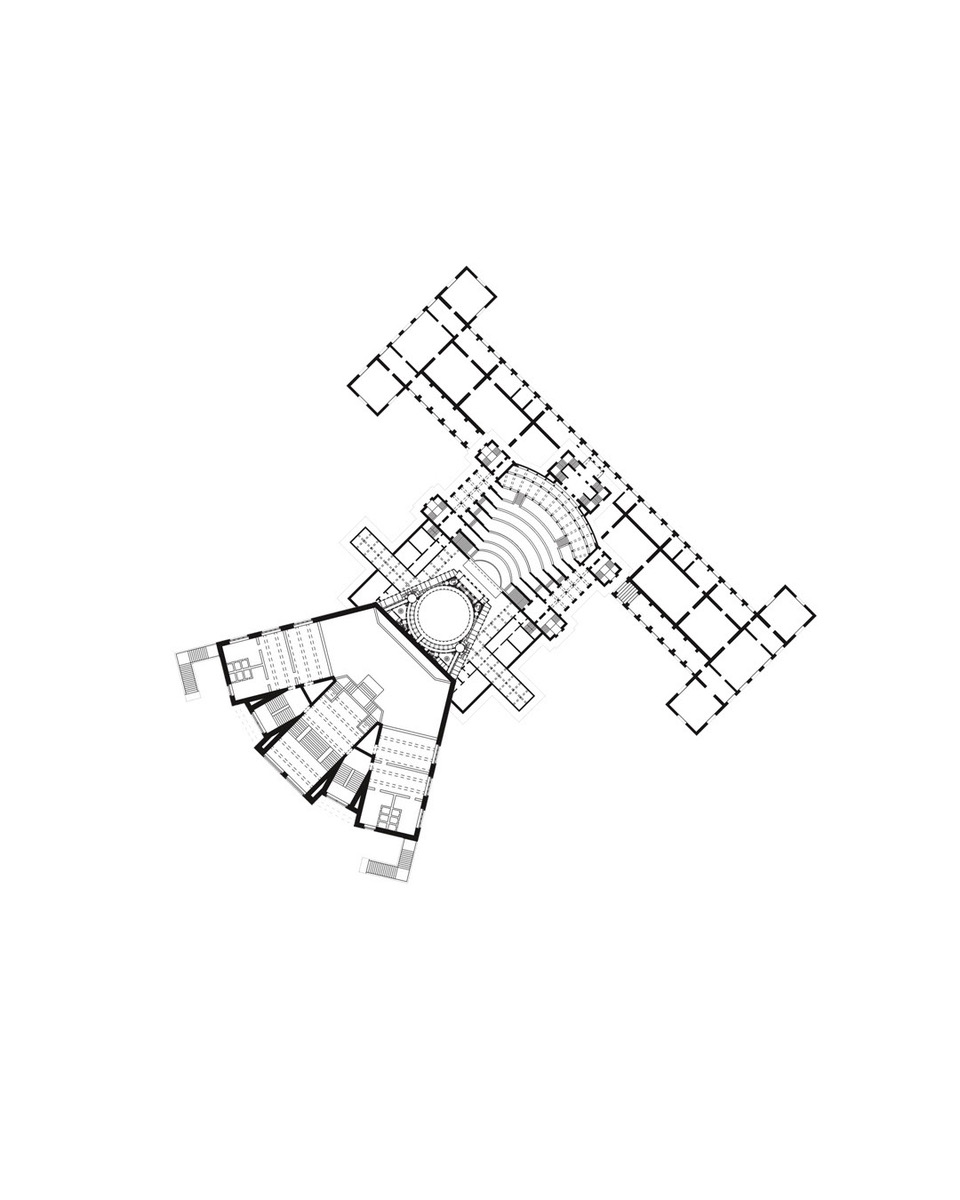
In contemporary architectural discourse, the imperative of Umbau—encompassing adaptive reuse, continual transformation, and the act of building upon the built—fundamentally challenges inherited notions of architectural production and authorial invention. In this intensive one-week seminar, guest professor Andreas Lechner explores the evolving relationship between architectural craftsmanship and the strategies of transformation. Drawing from his recent publication, Architectural Affordances – Typologies of Umbau (2025), Lechner articulates Umbau as a sophisticated mode of architectural thinking and making—one that exceeds mere technical renovation and engages in a nuanced dialogue with typology, historical continuity, and material articulation.
Structured around theoretical inquiry, typological analysis, and drawing-based research, the seminar invites participants to identify and interpret the latent spatial potentials—architectural affordances—embedded in existing structures. These affordances, understood as both ecological and cultural prompts, offer new ways of engaging with the resilience, adaptability, and social intelligence of the built environment. Through critical readings and case studies, students will examine the dialectics of permanence and transformation, of memory and reinvention, ultimately reframing Umbau not simply as a subset of practice but as architecture’s disciplinary core—at once critical praxis and artistic endeavor.
This concentrated exploration aims to equip participants with refined conceptual tools and spatial literacy, enabling a more ethically attuned and ecologically responsive engagement with the architectural heritage. In doing so, the seminar advances Um-Bau-Kunst as a necessary and vital architectural response to the entangled cultural, environmental, and societal challenges of our time.
- Trainer/in: Jörg Gleiter
- Trainer/in: Malte Serafin Heesen
- Trainer/in: Aline Schulze
PLANETARY FUTURES: Envisioning Multispecies Design
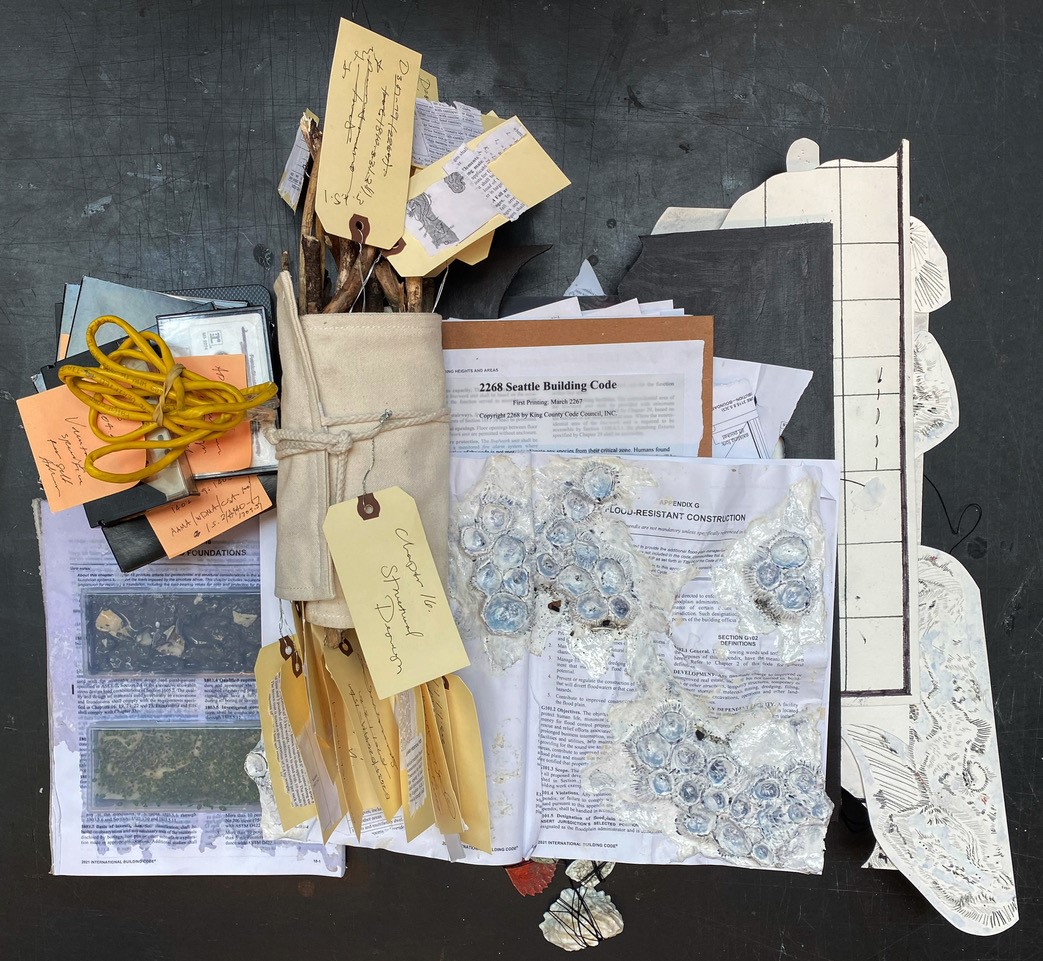
“We don't seem to live on the same planet!” Sociologist Bruno Latour may soon be proven right that this figure of speech has become literal, prompting architects to decide which planet they want to design for. While businessman Elon Musk, the CEO of SpaceX, just opened a retro-futuristic spaceship-styled diner in Hollywood and plans to establish self-sustaining settlements on planet Mars, philosopher Donna Haraway argues for “staying with the trouble” on planet Earth.
Haraway’s decision, however, would not only be live- but also mind-changing: asking us to engage in ways of ‘living with’ the planet and its multispecies inhabitants, it also inspires us to develop modes of ‘thinking with’ akin to the sf genres of science fiction or speculative fabulation. Venturing into Haraway’s planetary futures, we will wonder: What if we — as architects — collaborated with our multispecies colleagues? What if we transformed our methods of designing into practices of multispecies co-signing?
To explore these questions we will examine readings, exhibitions, and performances by Donna Haraway, philosopher of ethology Vinciane Despret, anthropologist Anna Tsing, and sociologist Bruno Latour. To develop forms of multispecies design, we will discuss case studies by offices such as Studio Animal-Aided Design, Scape Studio, Office for Living Architecture, Ants of the Prairie, and Mathur / DaCunha. Finally, we will interweave text, photography, and video to develop speculative scenarios envisioning planetary futures of multispecies design.
- Trainer/in: Jörg Gleiter
- Trainer/in: Malte Serafin Heesen
- Trainer/in: Aline Schulze
Type, Model, Style: Semiotic Analysis of Architecture
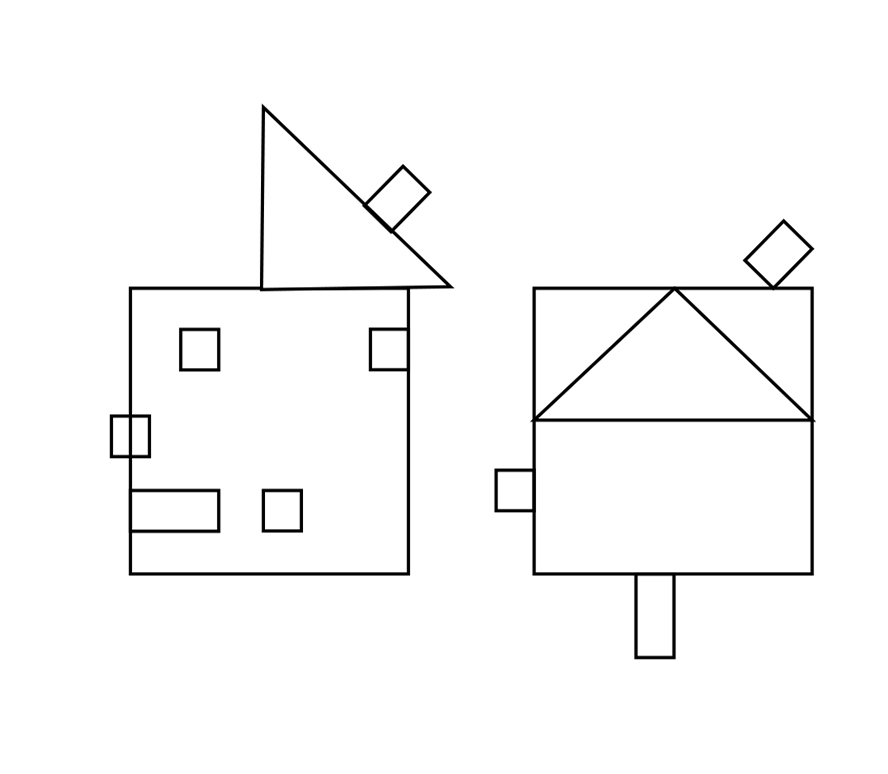
Beyond their functional, design, and material aspects, types constitute the basic elements of a language of architecture. Like the tropes and figures of speech in rhetoric, types are semiotic devices of the language of architecture. At the very least, types have a narrative function as they tell us something about the time, purposes, customs, expediency and culture in general. How does architecture speak through typology? How is meaning created through types? And in the first place, what does it mean if we talk of the language of architecture? How can architecture be meaningful at all? It will be based on the triadic sign model of Charles S. Peirce. By focusing on aspects of semiotics, rhetoric and language the seminar seeks to free typology from the hardened image of cataloged, formulaic knowledge and functionalist compartmentalization, thus aiming to take a critical look at the clichés and hardened stereotypes that dominate the debates surrounding the language of architecture, linguistic turn and the digital turn.
- Trainer/in: Jörg Gleiter
- Trainer/in: Malte Serafin Heesen
- Trainer/in: Aline Schulze