
Corsi
In this module, students review and gain more in-depth general technical knowledge and knowledge of energy technologies and systems in the context of current developments taking into account social responsibility and sustainable development. The module also covers the most important technological insights, and the technological foundations of the subsequent modules are explained. Students will be able to define and evaluate various procedures and apply them to selected cases in the energy sector.
- Trainer/in: Raunak Pravin Chepurwar
- Trainer/in: Jing Wu
- Trainer/in: Kunrong Zheng
Course Aims:
Students can describe, analyze, and evaluate the role of developing and emerging countries in global energy systems as well as their local and regional challenges, peculiarities, and opportunities. You can explain and apply energy-related macroscopic concepts such as economic development and path dependency. Students understand macroscopic concepts as well as political programs and efforts related to energy in developing and emerging countries and can contextually classify and evaluate measures and developments, especially against the background of the term energy poverty and its characteristics. Students are familiar with various off-grid technologies and can choose between them, including the use of suitable methods of integrative planning. Finally, students can act better in group projects, understand the process of development cooperation and can understand and design central elements in it, and are aware of their responsibility for global as well as local sustainable development.
Course Content:
Global energy (long-term scenarios, determinants of the world energy system, energy in developing and emerging economies); Sustainable development (SDGs, growth and development theory, Hartwick rule, resource dependency, and diversification, case studies); Energy poverty and access (definition, empirical data, generation and consumption patterns of low-income households, subsidies for fossil fuels and reforms, the role of energy efficiency, case studies); Rural electrification and off-grid technologies (off-grid technologies, computer-assisted planning of off-grids including the basics of mixed-integer optimization, economics, and management in off-grids, the practice of development cooperation); Project phase (e.g. off-grid design, development cooperation, business case).
- Trainer/in: Dawud Ansari
- Trainer/in: Gernot Bohmann
- Trainer/in: Wassim Brahim
- Trainer/in: Wassim Brahim
- Trainer/in: Raunak Pravin Chepurwar
- Trainer/in: Hadi Daaboul
- Trainer/in: Kristin Dietrich
- Trainer/in: Christian Hirschhausen
- Trainer/in: Rémy Pierre Joseph Alexandre Lavaud
- Trainer/in: Sandra Lubahn
- Trainer/in: Joachim Müller-Kirchenbauer
- Trainer/in: Nesdi Sofia Pinzon Jaimes
- Trainer/in: Khadidja Sakhraoui
- Trainer/in: Jing Wu
- Trainer/in: Kunrong Zheng
Course Aims:
Students can describe, analyze, and evaluate the role of developing and emerging countries in global energy systems as well as their local and regional challenges, peculiarities, and opportunities. You can explain and apply energy-related macroscopic concepts such as economic development and path dependency. Students understand macroscopic concepts as well as political programs and efforts related to energy in developing and emerging countries and can contextually classify and evaluate measures and developments, especially against the background of the term energy poverty and its characteristics. Students are familiar with various off-grid technologies and can choose between them, including the use of suitable methods of integrative planning. Finally, students can act better in group projects, understand the process of development cooperation and can understand and design central elements in it, and are aware of their responsibility for global as well as local sustainable development.
Course Content:
Global energy (long-term scenarios, determinants of the world energy system, energy in developing and emerging economies); Sustainable development (SDGs, growth and development theory, Hartwick rule, resource dependency, and diversification, case studies); Energy poverty and access (definition, empirical data, generation and consumption patterns of low-income households, subsidies for fossil fuels and reforms, the role of energy efficiency, case studies); Rural electrification and off-grid technologies (off-grid technologies, computer-assisted planning of off-grids including the basics of mixed-integer optimization, economics, and management in off-grids, the practice of development cooperation); Project phase (e.g. off-grid design, development cooperation, business case).
- Trainer/in: Nadji Agadi
- Trainer/in: Dawud Ansari
- Trainer/in: Gernot Bohmann
- Trainer/in: Wassim Brahim
- Trainer/in: Wassim Brahim
- Trainer/in: Raunak Pravin Chepurwar
- Trainer/in: Hadi Daaboul
- Trainer/in: Kristin Dietrich
- Trainer/in: Christian Hirschhausen
- Trainer/in: Rémy Pierre Joseph Alexandre Lavaud
- Trainer/in: Sandra Lubahn
- Trainer/in: Joachim Müller-Kirchenbauer
- Trainer/in: Nesdi Sofia Pinzon Jaimes
- Trainer/in: Khadidja Sakhraoui
- Trainer/in: Abdelkader Sallemine
- Trainer/in: Jing Wu
- Trainer/in: Kunrong Zheng
The far-reaching changes brought about by the energy transition are increasingly affecting other industries. Policy objectives and stricter regulations require companies to be more responsive to their energy and resource consumption, but there can also be great opportunities. In addition to potential savings through greater energy efficiency, the utilization of flexibility options can also be used to justify new business models.
In this module, innovative research approaches in the fields of energy efficiency and building technology will be analyzed and applied in cooperation with companies from the respective fields, offering students and companies alike an attractive cooperation at the interface of entrepreneurial praxis, research and science – a win-win situation for both sides.
Students look at aspects of buildings and energy efficiency, including greenhouse gas emissions, demand management, combined heat and power, process chain management, energy efficiency technologies, amortization calculations, local heating and cooling supply, project management, and ISO standards. In doing so, they apply the knowledge gained in earlier modules in practice.
- Trainer/in: Gernot Bohmann
- Trainer/in: Raunak Pravin Chepurwar
- Trainer/in: Hadi Daaboul
- Trainer/in: Christian Dworak
- Trainer/in: Rémy Pierre Joseph Alexandre Lavaud
- Trainer/in: Sandra Lubahn
- Trainer/in: Joachim Müller-Kirchenbauer
- Trainer/in: Nesdi Sofia Pinzon Jaimes
- Trainer/in: Jessica Schönebeck
- Trainer/in: Jing Wu
- Trainer/in: Kunrong Zheng
Course Aims:
The overall qualification goal of the module is to enable the students to plan, implement, and successfully complete projects economically, efficiently, and according to modern agile and classic management methods. They understand the project or product life cycle and, based on the mediating classic and agile project and product management methodology, they can create, analyze, interpret and evaluate individual essential building blocks of project management and apply them future-oriented. They will learn about challenges in ensuring quality (quality management), opportunities, and threats in development and implementation (risk management), and the principles of identifying user needs (requirements management). Furthermore, the students learn the roles, tasks, and processes in modern project management, as well as the special features and challenges in stakeholder management, and can implement this in the future in a communication and information management strategy. Also, the students are aware of the similarities and differences between individual and multi-project / project portfolio management.
Course Content:
At the end of the course, the students can act in the mediated roles in agile and classic projects, understand the essential project management processes, can generate central management documents themselves, and can apply and further deepen the methodology in future projects.
- Trainer/in: Gernot Bohmann
- Trainer/in: Raunak Pravin Chepurwar
- Trainer/in: Hadi Daaboul
- Trainer/in: André Dechange
- Trainer/in: Phillip Hebert
- Trainer/in: Rémy Pierre Joseph Alexandre Lavaud
- Trainer/in: Sandra Lubahn
- Trainer/in: Nesdi Sofia Pinzon Jaimes
- Trainer/in: Jing Wu
- Trainer/in: Kunrong Zheng
- Trainer/in: Gernot Bohmann
- Trainer/in: Raunak Pravin Chepurwar
- Trainer/in: Hadi Daaboul
- Trainer/in: Phillip Hebert
- Trainer/in: Rémy Pierre Joseph Alexandre Lavaud
- Trainer/in: Sandra Lubahn
- Trainer/in: Nesdi Sofia Pinzon Jaimes
- Trainer/in: Jing Wu
- Trainer/in: Kunrong Zheng
- Trainer/in: Gernot Bohmann
- Trainer/in: Raunak Pravin Chepurwar
- Trainer/in: Hadi Daaboul
- Trainer/in: Maximilian Evers
- Trainer/in: Jeremias Hollnagel
- Trainer/in: Rémy Pierre Joseph Alexandre Lavaud
- Trainer/in: Sandra Lubahn
- Trainer/in: Joachim Müller-Kirchenbauer
- Trainer/in: Nesdi Sofia Pinzon Jaimes
- Trainer/in: Jing Wu
- Trainer/in: Kunrong Zheng
This module is an introduction to economics. It covers the most important principles of economics taking into account social responsibility and sustainable development. The module engages with the latest research and encourages a critical and reflective approach in providing a foundation in economics for subsequent modules. Students are able to identify specialized knowledge and aspects of economics and compare general and selected cases from the energy sector.
- Trainer/in: Gernot Bohmann
- Trainer/in: Raunak Pravin Chepurwar
- Trainer/in: Hadi Daaboul
- Trainer/in: Sarah El-Sheikh
- Trainer/in: Georg Erdmann
- Trainer/in: Maike Kalz
- Trainer/in: Maike Eileen Kalz
- Trainer/in: Rémy Pierre Joseph Alexandre Lavaud
- Trainer/in: Sandra Lubahn
- Trainer/in: Joachim Müller-Kirchenbauer
- Trainer/in: Nesdi Sofia Pinzon Jaimes
- Trainer/in: Karl Seeger
- Trainer/in: Jing Wu
- Trainer/in: Kunrong Zheng
This module is an introduction to business studies. It covers the most important principles of business studies taking into account social responsibility and sustainable development. The module engages with the latest research and encourages a critical and reflective approach in providing a foundation in business studies for subsequent modules. Students will be able to define the main features of business studies, apply problem-solving skills to case studies using different fields of knowledge and present options for optimizing the energy sector.
- Trainer/in: Justin Becker
- Trainer/in: Justin Becker
- Trainer/in: Gernot Bohmann
- Trainer/in: Volker Bühner
- Trainer/in: Raunak Pravin Chepurwar
- Trainer/in: Hadi Daaboul
- Trainer/in: Mariam Ahmed Mostafa Elsawy Elsheikh
- Trainer/in: Christoph Hendrik Groth-Tonberge
- Trainer/in: Phillip Hebert
- Trainer/in: Dodo Knyphausen-Aufseß
- Trainer/in: Rémy Pierre Joseph Alexandre Lavaud
- Trainer/in: Laura Lehmann
- Trainer/in: Sandra Lubahn
- Trainer/in: Joachim Müller-Kirchenbauer
- Trainer/in: Nesdi Sofia Pinzon Jaimes
- Trainer/in: Jing Wu
- Trainer/in: Kunrong Zheng
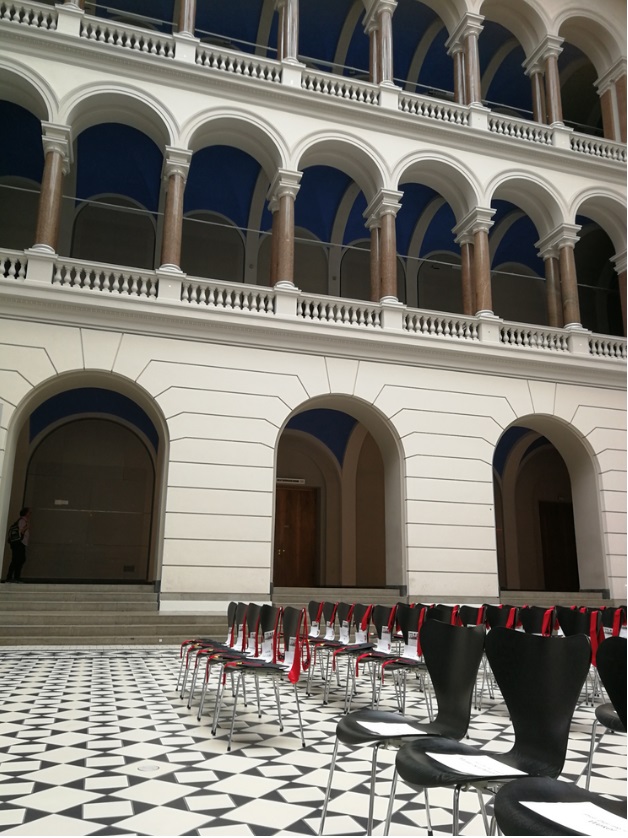
GRADUATION CEREMONY June 2026
Energy Management Master Thesis
|
Evaluators: individual For completion of studies within the 3rd term:
If you start this process later, you may not be able to graduate together with your class in summer 2026 and/or need another semester; you will then receive your grade and title later. Note that the amount of semesters you have needed for graduation will be stated on your document. Timely submission (18 weeks after issue of topic) in the correct form is part of the Regulations' requirements. Note that the master thesis is an examination that can be repeated only once. Please read the Energy Management Study and Examination Procedures and the TU General Study and Examination Procedures. |
- Trainer/in: Anika Bethan
- Trainer/in: Gernot Bohmann
- Trainer/in: Irene Brown
- Trainer/in: Raunak Pravin Chepurwar
- Trainer/in: Hadi Daaboul
- Trainer/in: Maximilian Evers
- Trainer/in: Melanie Göritz
- Trainer/in: Phillip Hebert
- Trainer/in: Rémy Pierre Joseph Alexandre Lavaud
- Trainer/in: Laura Lehmann
- Trainer/in: Sandra Lubahn
- Trainer/in: Joachim Müller-Kirchenbauer
- Trainer/in: Nesdi Sofia Pinzon Jaimes
- Trainer/in: Jing Wu
- Trainer/in: Kunrong Zheng