
Kurslar
- Trainer/in: Daniel Korwan
- Trainer/in: Silvia von Keitz
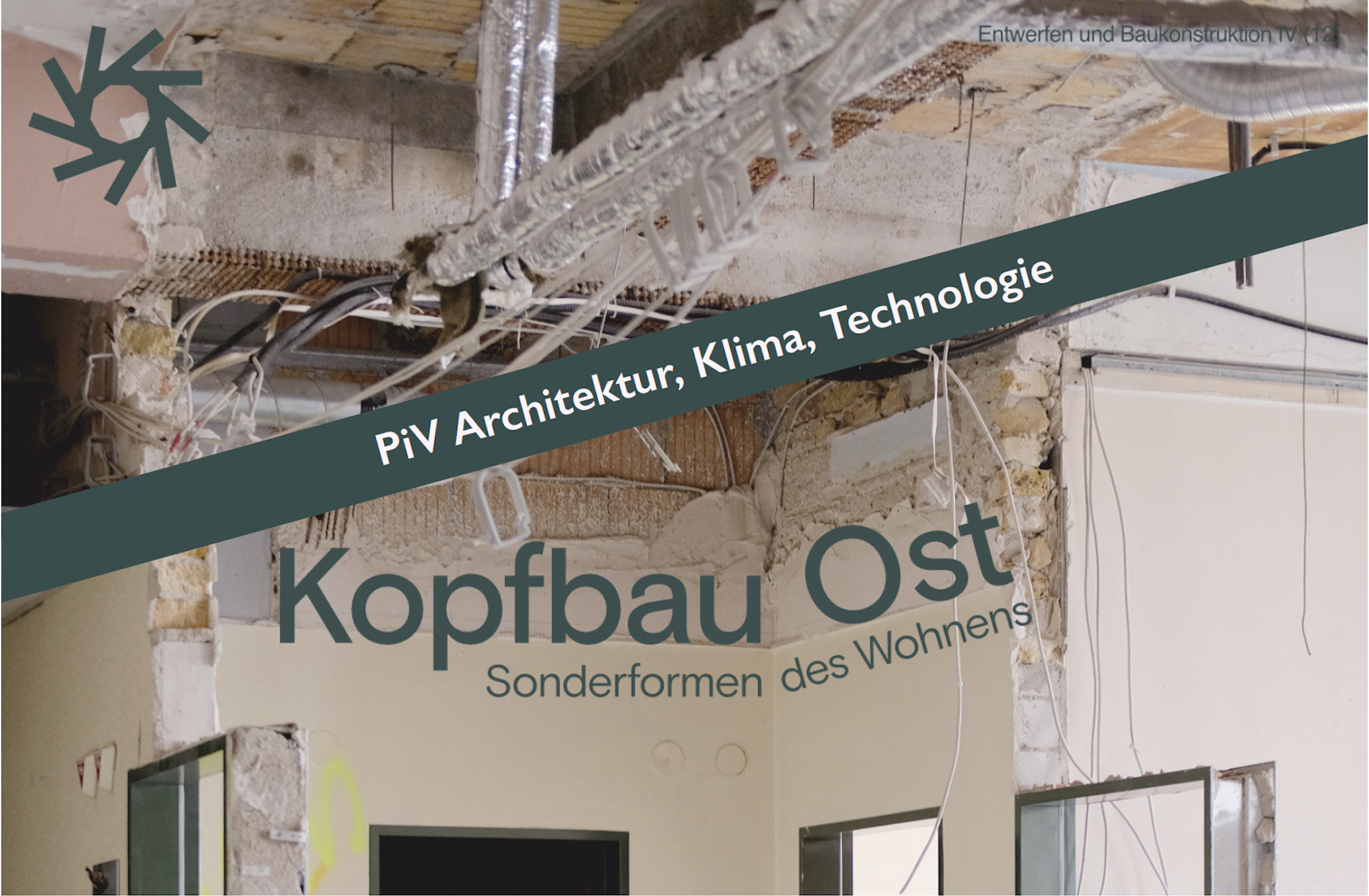
Dies ist der ISIS Kurs zu der Lehrveranstaltung Architektur, Klima, Technology (3cp) für das Entwurfsstudio Plattenbeauty.
Diese Lehrveranstaltung bildet zusammen mit der Lehrveranstaltung Gebäudeenergiesysteme (3cp) das Modul Projektintegrierter Entwurf Energie (6cp).
- Trainer/in: Philip Stillke
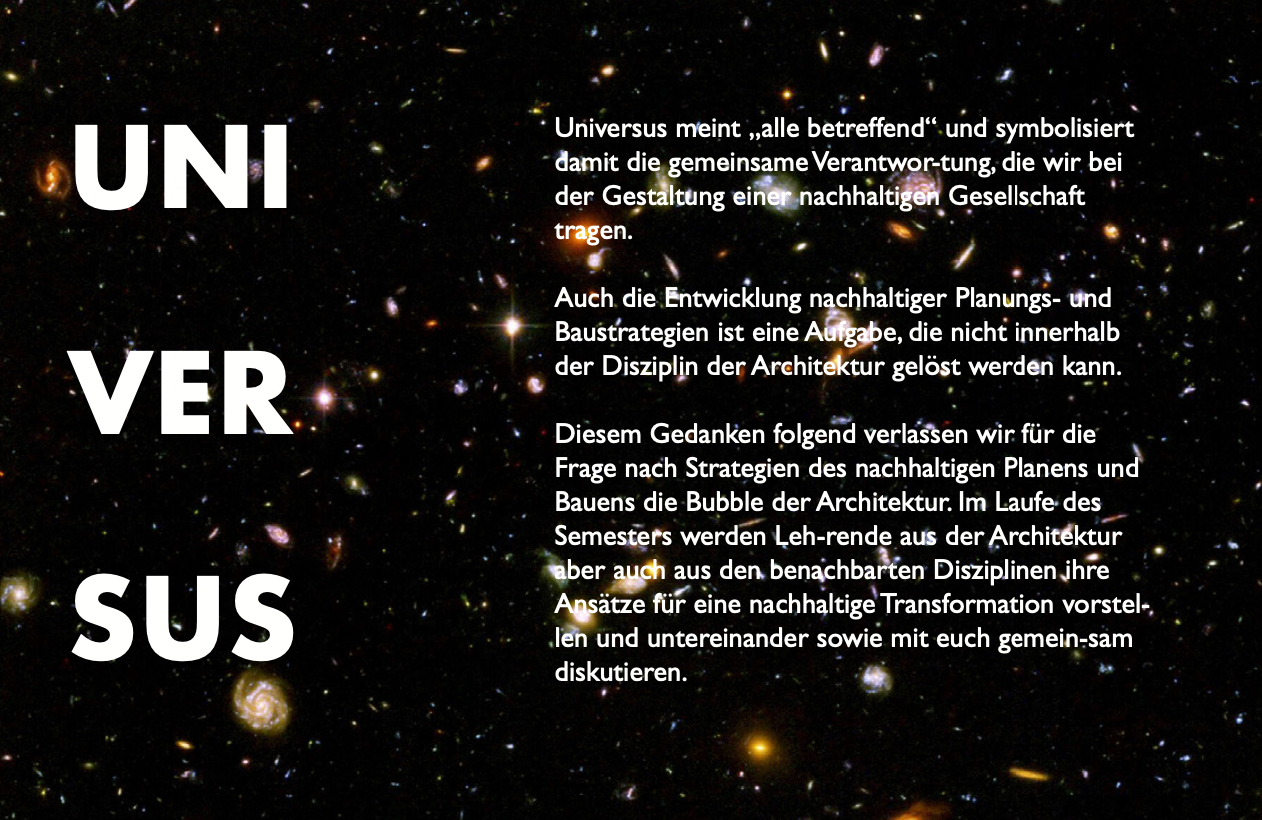
Universus meint „alle betreffend" und symbolisiert damit die gemeinsame Verantwortung, die wir bei der Gestaltung einer nachhaltigen Gesellschaft tragen.
Auch die Entwicklung nachhaltiger Planungs- und Baustrategien ist eine Aufgabe, die nicht innerhalb der Disziplin der Architektur gelöst werden kann.
Diesem Gedanken folgend verlassen wir für die Frage nach Strategien des nachhaltigen Planens und Bauens die Bubble der Architektur. Im Laufe des Semesters werden Lehrende aus der Architektur aber auch aus den benachbarten Disziplinen ihre Ansätze für eine nachhaltige Transformation vorstellen und untereinander sowie mit euch gemeinsam diskutieren.
- Trainer/in: Eileen Dorer Li
- Trainer/in: Verdiana Greco
- Trainer/in: Daniel Korwan
- Trainer/in: Silvia von Keitz
Regenerative Design Strategies
Is the world better off with our buildings - to build or not to build?
It is not surprising that we ask ourselves this question, as we already know that one of the main drivers of global warming is the way we build. The construction sector is responsible for almost 40% of the planet's greenhouse gases and consumes 60% of the world's resources. In Germany, the construction and demolition waste comprises the largest fraction of waste, accounting for more than 50% of total waste generation. As a result, natural ecosystems are seriously damaged by air, water and soil pollution, loss of biodiversity and resource depletion.
What if we could turn this around and focus on making a positive contribution? Could the built environment be seen as an opportunity to develop new solutions rather than a problem to be solved? Could a building contribute to the well-being of its occupants and the environment and thereby create positive social and economic effects? With this goal in mind, we will explore and investigate different regenerative design strategies and tools.
Let's re_think together!
"Being less bad, is simply not good enough."
- Trainer/in: Eileen Dorer Li
- Trainer/in: Verdiana Greco
- Trainer/in ohne Editorrecht: Nina Maria Pawlicki
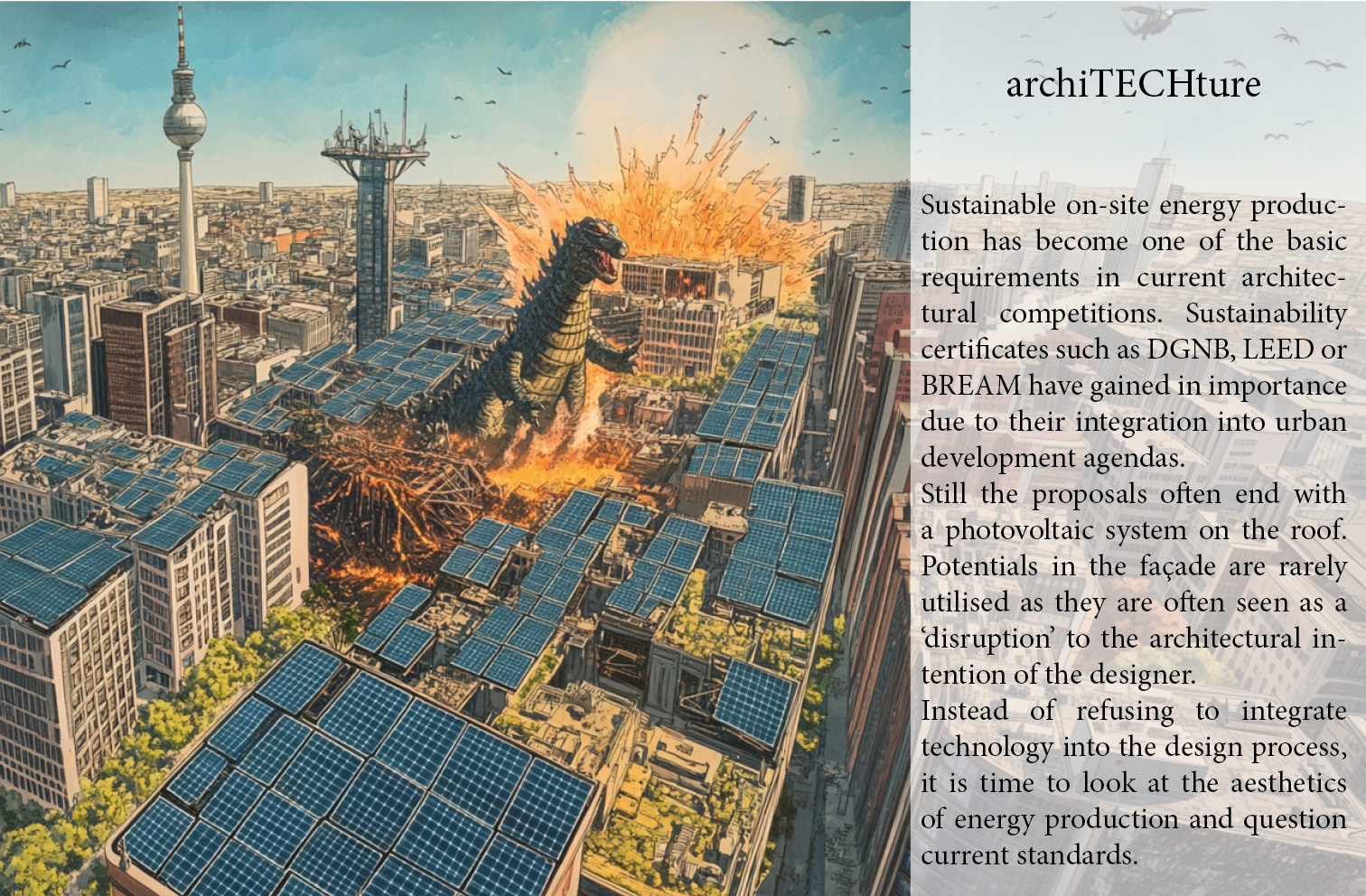
archiTECHture
Sustainable on-site energy production became one of the core requirements in current architecture competitions. The chase for sustainability certificates like DGNB, LEED, HQE or BREAM has taken an importance due to their integration in city development and urban planning concepts.
Furthermore, those certificates have impact on subventions and project funding. Often the proposal ends with a photovoltaic coverage on the roof, while ignoring potentials in the façade to ‘protect’ the architectural intention of the designer.
Instead of refusing the integration of technical equipment into the design process it is time to learn about the esthetics of technical equipment.
You will learn to understand the technical aspects of energy production to liberate yourself from solar panels that look like satellite wings from the early 90’s and instead integrate technical equipment with design intention into the architectural process.
- Trainer/in: Elisa Stamm