
Kurslar

FG Stadtökologie: Abmilderung von Hitze-Stress durch klimasensitives Stadtdesign (Projekt)
Mitigating heat stress through climate-sensitive urban design
- "Masterprojekt / Profilierungsprojekt Ökologie" M.Sc. / B.Sc. Ökologie und Umweltplang;
- "Environmental Resources in Urban Regions" M.Sc. Urban Ecosystem Sciences (Stadtökologie)
The project can probably be taken as an equivalent to other project modules for profiling / specialisation. We encourage international students to join the project!
Click here for the → VVZ-MOSES entry
- Data analysis with R or Python (numpy, pandas)
- Spatial data analysis with QGIS, R (sf, raster) or Python (xarray, geopandas)
- Writing scientific manuscripts
Background
Rising temperatures and frequent heatwaves in cities, described by the “urban heat island” effect, pose significant risks to public health and the economy. In order to reduce the impact of heatwaves in urban areas, well thought-out urban planning is necessary. Integrating green infrastructure and nature-based solutions is crucial for creating resilient and climate-sensitive urban spaces.
The closure of the former Tegel Airport offers a unique opportunity in Berlin. A large area has been cleared for urban development, attracting interest from both the public and investors. In addition to housing estates and the use of the former buildings, an industrial park is to be developed in the area next to the main airport building. One of the planning offices managing the redevelopment of the airport site called for a scientific assessment of the proposed plans and for new scientifically developed ideas with a focus on efficient heat stress mitigation.
Key Questions
- How can urban design for the Urban Tech Republic development be optimized to reduce local heat stress
- How can heat stress be effectively quantified to assess the impact of urban design?
The aim of this course is a publication focusing on regional climatological data and its analysis while building on previous analysis.
- Helping Hand: Alexander Plakias
Grundlagenprojekt I Ökologie FG Bodenkunde/FG Ökohydrologie
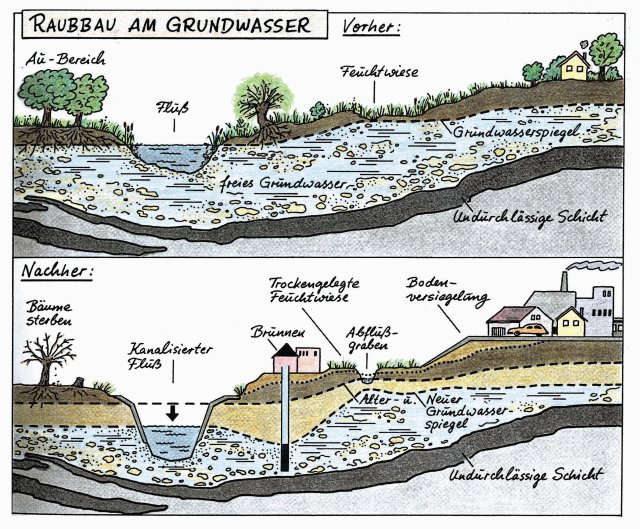
Im Projekt werden zu Beginn des Studiums grundlegende Inhalte und thematische Schwerpunkte der Bodenkunde und der Hydrologie interdisziplinär verbunden vermittelt.
Die Funktionen von Böden (Lebensraumfunktion, ökologische Regelungsfunktion, Kreislauffunktion, Nutzungsfunktion und Archivfunktion – siehe Bundesbodenschutzgesetz BBodSchGes) sind eng mit dem Wasserhaushalt von Böden und Landschaften verbunden. Der Zustand von Gewässern (inkl. Grundwasser siehe Wasserhaushaltsgesetz WHG) und deren Ökosystemdienstleistungen (MEA 2005)- versorgende, regulierende, kulturelle und unterstützende - wiederum hängen stark von den mit ihnen in Verbindung stehenden Böden ab.
- Trainer/in: Ender Daldaban
- Trainer/in: Thomas Nehls
- Trainer/in: Anne Wagner
- Trainer/in ohne Editorrecht: Josephina Neumann