
Kurse
- Trainer/in: Iman Atwa
- Trainer/in: Abde Lilith Batchati
- Trainer/in: David Bauer
Spaces of Circularity
Exploring Logistical Backends of the Future Building Industry
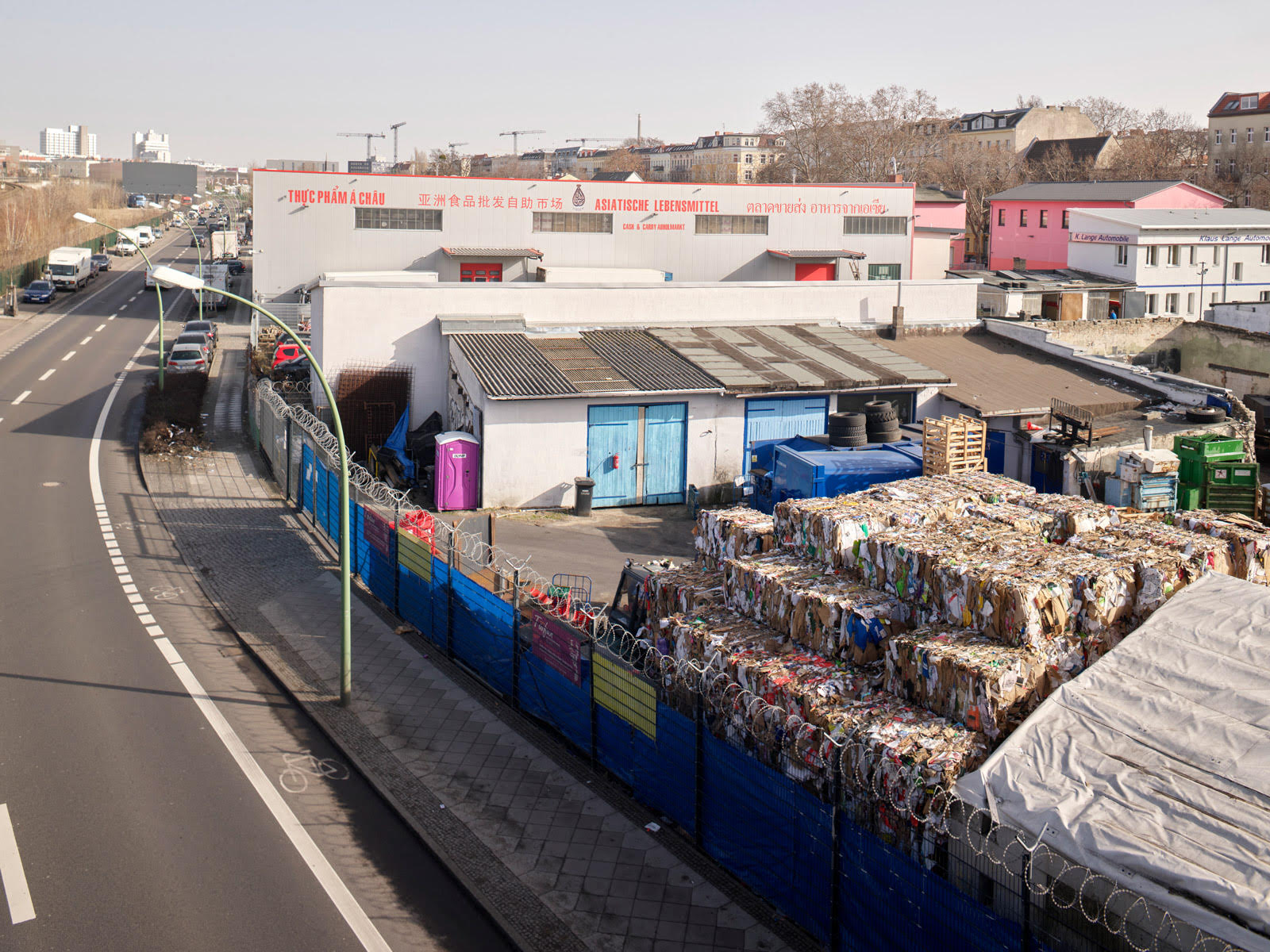
The Circular Economy (CE) concept has risen as a counterpoint to the conventional linear production-consumption model. Within the construction industry – a lavish contributor to atmospheric carbon dioxide emissions organised within global or trans-local networks – future trajectories towards sustainability encompass diverse approaches. These include developing alternative / bio-based materials, implementing net-zero production cycles, embracing adaptive reuse practices, and adopting radical regionalism to constrain excessive transportation routes. While substantial transformation knowledge is gathered and applied in pilot developments, the scale and spatial extent of the infrastructural network organising these future models is hard to anticipate.
Looking at the city region of Vienna, this seminar invites students to investigate the logistical spaces of the future circular building economy and speculate about the subsequent reconfiguration of the urban and regional contexts they are embedded in. For this, participants will (1) read, (2) ask and (3) assemble.
The first part provides foundational texts to gain an insight into the concept of CBE and the construction industry’s current infrastructural networks and logistic backbones.
In the second part, participants will leverage their knowledge through a series of guided interviews with international experts aimed at understanding the current state, envisioning the desired state, and delineating the pathway from the current situation to the desired outcome.
The seminar will be conducted in collaboration with TU Wien and Biofabrique Vienna, a pilot project of the Vienna Business Agency and Atelier LUMA. Guests will include researchers from Bauhaus Earth. A site visit to Vienna is to be determined.
- Trainer/in: Iman Atwa
- Trainer/in: Abde Lilith Batchati
- Trainer/in: David Bauer
- Trainer/in: Aikaterini Tzouvala
Sector-Coupling Living Labs
Testing and validating productive use of energy in urban and rural areas in Rwanda and Ecuador
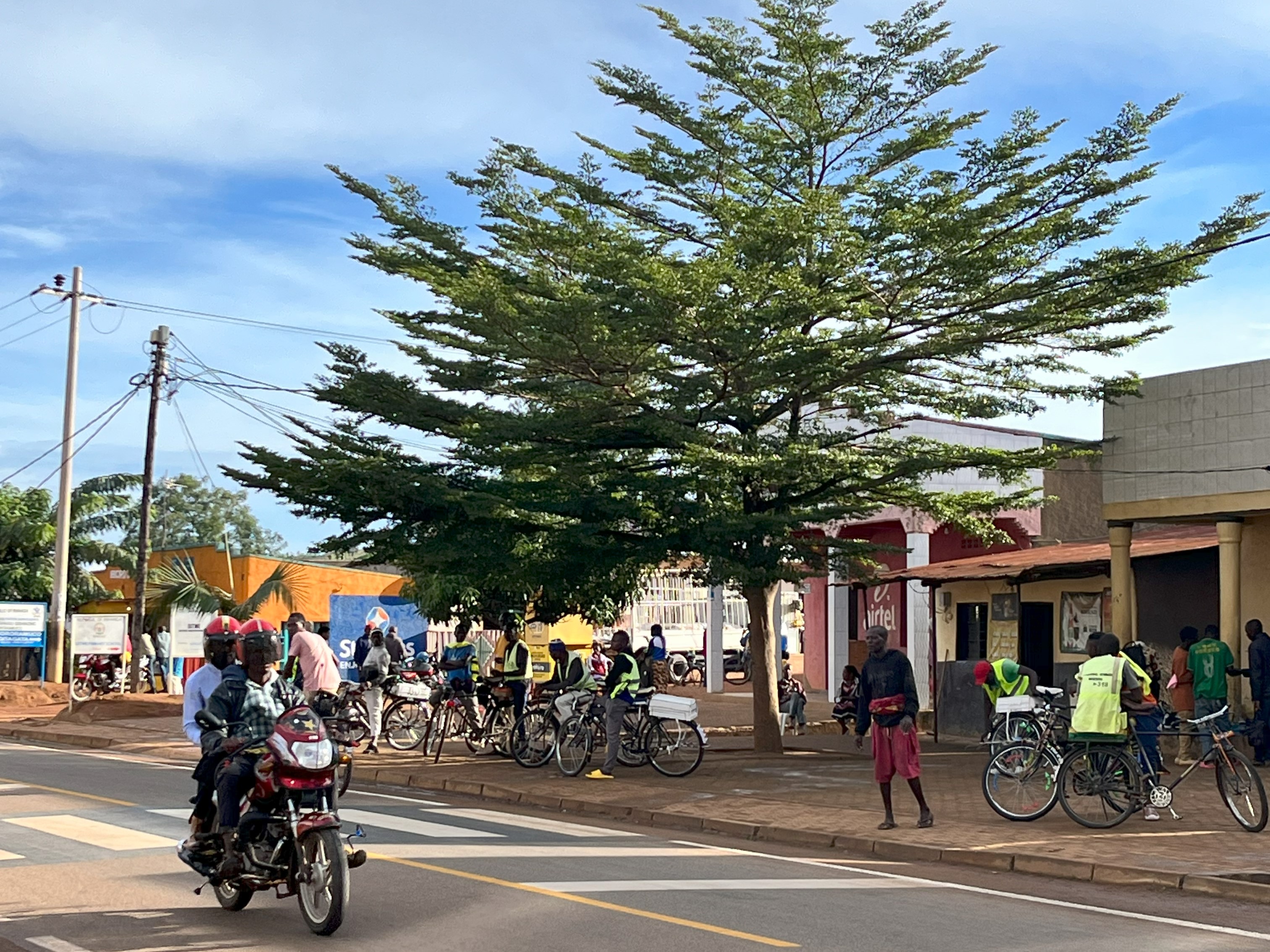
This collaborative design studio will focus on the physical linkages between energy, mobility, waste management and buildings in different geographic settings in Africa and Latin America. The design concepts will consider policy and finance aspects and apply co-development approaches. Cross-sectoral, gender-sensitive living labs act as blueprints for local implementation actions in the selected partner countries and beyond. Studio participants will have the opportunity to exchange with decision-makers, technical staff and entrepreneurs in the co-design process.
This studio supports on-going research and implementation projects through improving synergies between key sectors and fostering local innovation in transformative living labs with the aim to contribute to sustainable urban development.
The PIV linked to the studio is realized in cooperation with UN-Habitat, the Massachusetts Institute of Technology, the Wuppertal Institute and local project partners.
- Trainer/in: Iman Atwa
- Trainer/in: Abde Lilith Batchati
- Trainer/in: Oliver Peter Lah
Insurgent Design
Unlearning practices through marginalized spaces and communities
Through a set of collaborative methods and tools for mapping and design the studio proposes to develop a critical understanding of the role of architects and urbanists, especially in contexts of marginalized spaces and communities.
The studio intends to promote a transdisciplinary debate by focusing on the perceptions of inclusion of refugees in Berlin, and by collaborating closely with local actors and institutions. Thus, it encourages students to reflect on the integrative and co-productive role of city-building professionals and to devise scenarios that aim to transform the current situation.
The discussions will address issues of spatial conflicts and negotiation, insurgent planning and design, the right to the city, housing vs. shelter from the perspective of institutional barriers, architectural and infrastructural elements and social-spatial dynamics.
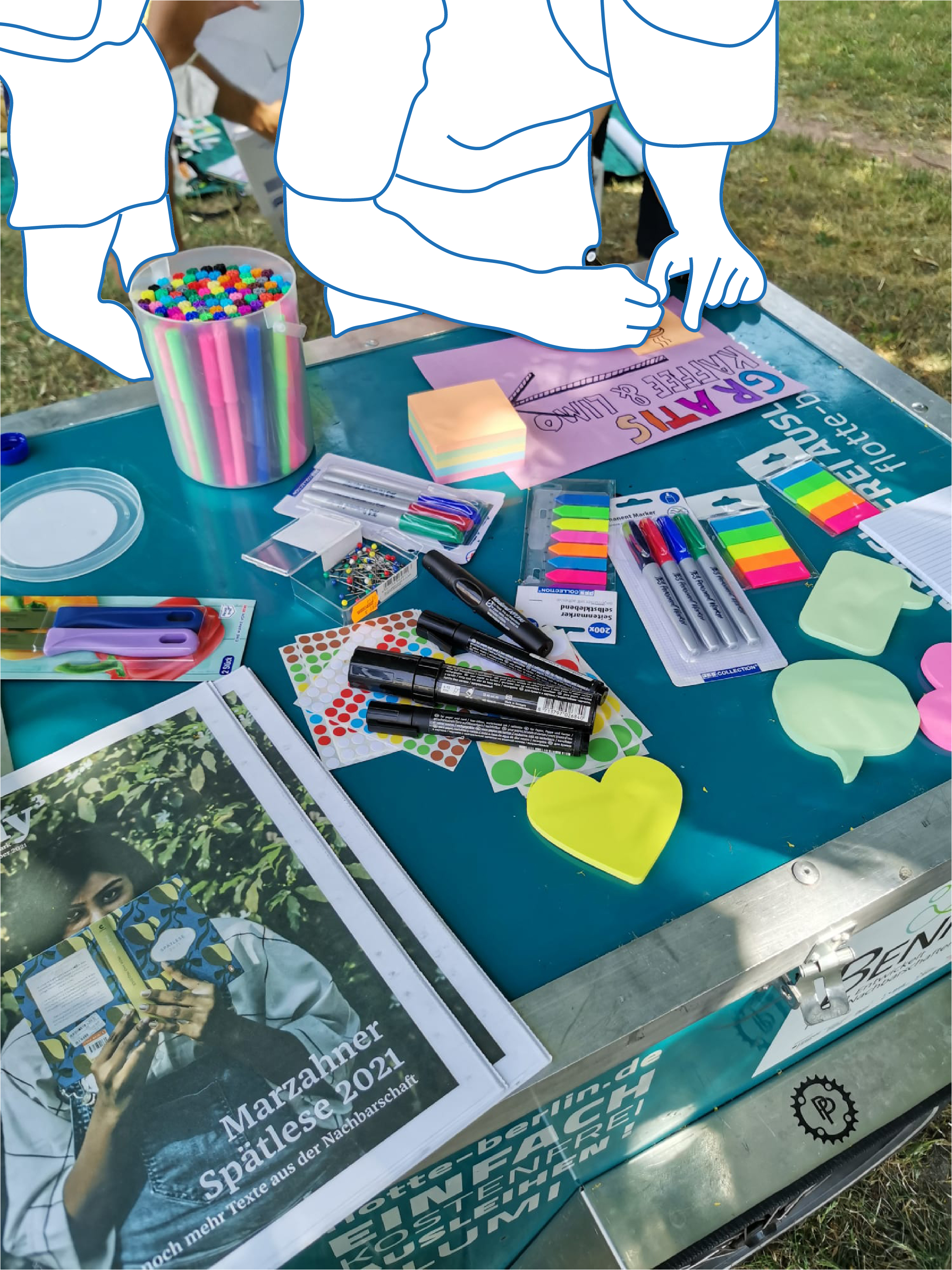
In close collaboration withe the Senate’s integration program “BENN” in Marzahn, students will have the opportunity to engage with local actors and the community, develop activities and interventions and establish a dialog with refugees living in Berlin shelters.
The studio is a cooperation of the research project „Beyond the Shelter: Limits and Possibilities between Departure and Endurance in Refugee Shelters in Berlin“ (DFG) with Juliana Canedo, the project „Architectures of Asylum“ (SFB: 1265 Re-figurations of Space“, DFG) with Qusay Amer and Francesca Ceola, as well as Maureen Abi-Ghanem and Saba Barani. The Studio will be developed in cooperation with the Seminar Contemporary Arab Urbanism and joint activities will be planned.
A PIV connected to the Studio will deal with broader theoretical questions related to migration and refugee studies; it will be conducted as a lecture series in cooperation with “Architectures of Asylum”.
- Trainer/in: Rabeea Abbasi
- Trainer/in: Qosay Amer
- Trainer/in: Abde Lilith Batchati
- Trainer/in: Francesca Ceola
- Trainer/in: Tuanne Monteiro de Carvalho
- Trainer/in: Saleh Ahmed Qazi
- Trainer/in: Juliana Soares Gomes Canedo
- Trainer/in: Aikaterini Tzouvala
Spectral Natures
From queer ecologies to urban practice
Society and nature have too often been understood as separate - an asymmetrical and uneven arrangement of power between human and non-human realms. In the age of climate breakdown, technological fixes dominate and are regarded as the remedy to saving our rapidly crumbling planet.
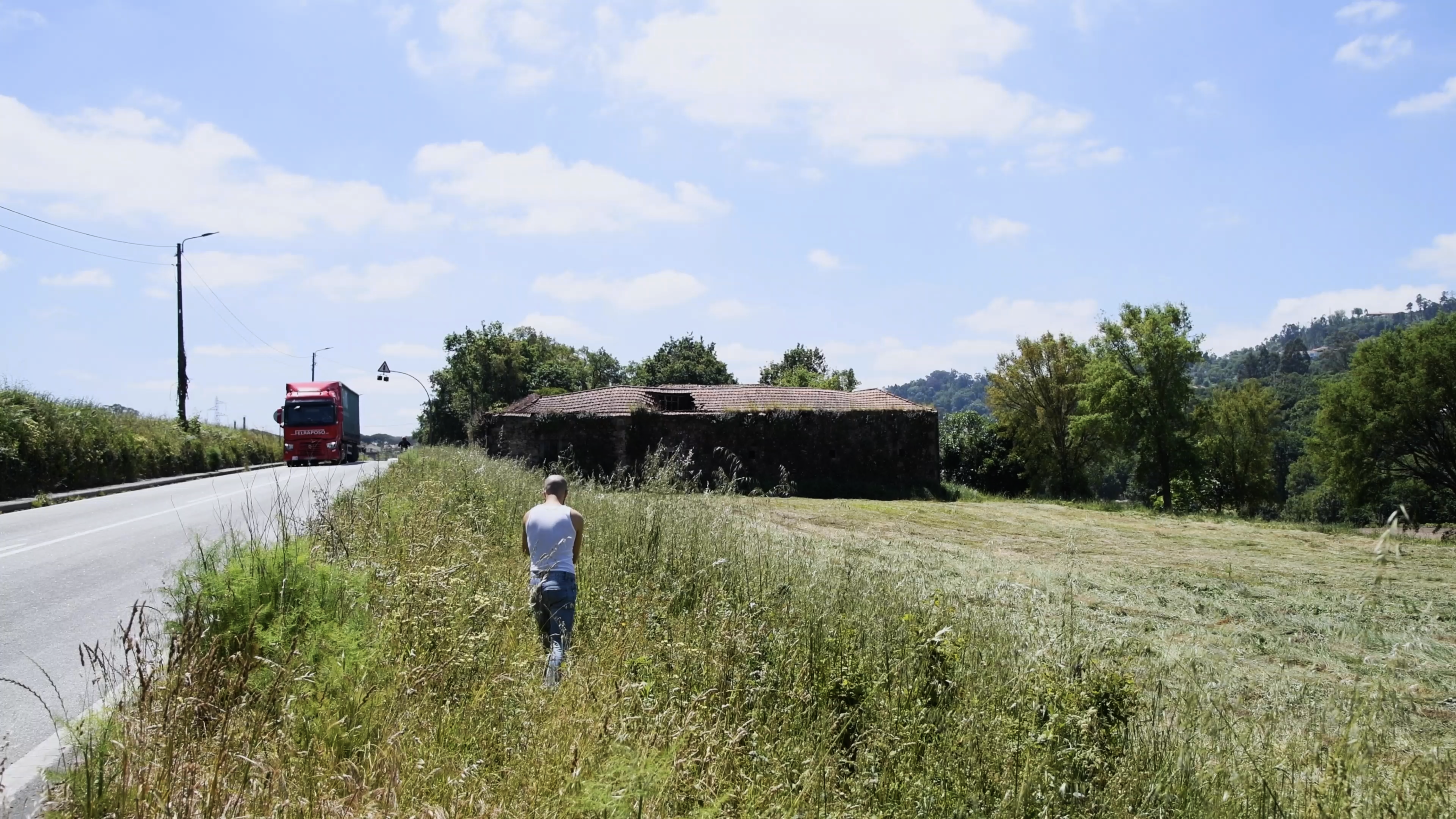
In contrast, queer ecology is a growing transdisciplinary approach that challenges heteronormative, anthropocentric views on the (natural) world and seeks to transcend socially constructed binaries such as culture vs. nature, civilized vs. untamed, pristine vs. contaminated, urban vs. rural, male vs. female. Queer ecology acknowledges the fluidity and diversity of identities within human and other-than-human spheres. It celebrates the unusual, the odd, and the messy realities of cohabitation. It dismantles systems of oppression and shifts the marginal to the center. Its goal is to cultivate inclusive relationships with the environment and all living beings, honoring the widest spectra and the pluriverse, rather than limiting them.
In this research-driven and explorative studio, we will collectively approach queer ecologies and spectral urban natures from multiple angles. We will analyze ecofeminist utopias and practices of care for the earth; we will learn from indigenous knowledge and bicultural diversity; we will garner knowledge from queer adaptation and community practices. In a collective effort and equipped with insights from case studies and transdisciplinary readings, we will develop strategies and formats for an alternative urban practice rooted in a queer ecology approach.
The studio is accompanied by inputs, field trips, lectures, film screenings, and workshops and will mainly take place at Floating University. Students should come with an open mind and bring enthusiasm for the topic, motivation for peer learning, independent critical thinking, and the readiness to freely develop projects of urban practice in small groups and as a collective.
- Trainer/in: Iman Atwa
- Trainer/in: Christian Georg Haid
- Trainer/in: Aikaterini Tzouvala