
Corsi
Architecture Inside-Out — Interior Design
Berlin as a Case Study and Research Laboratory
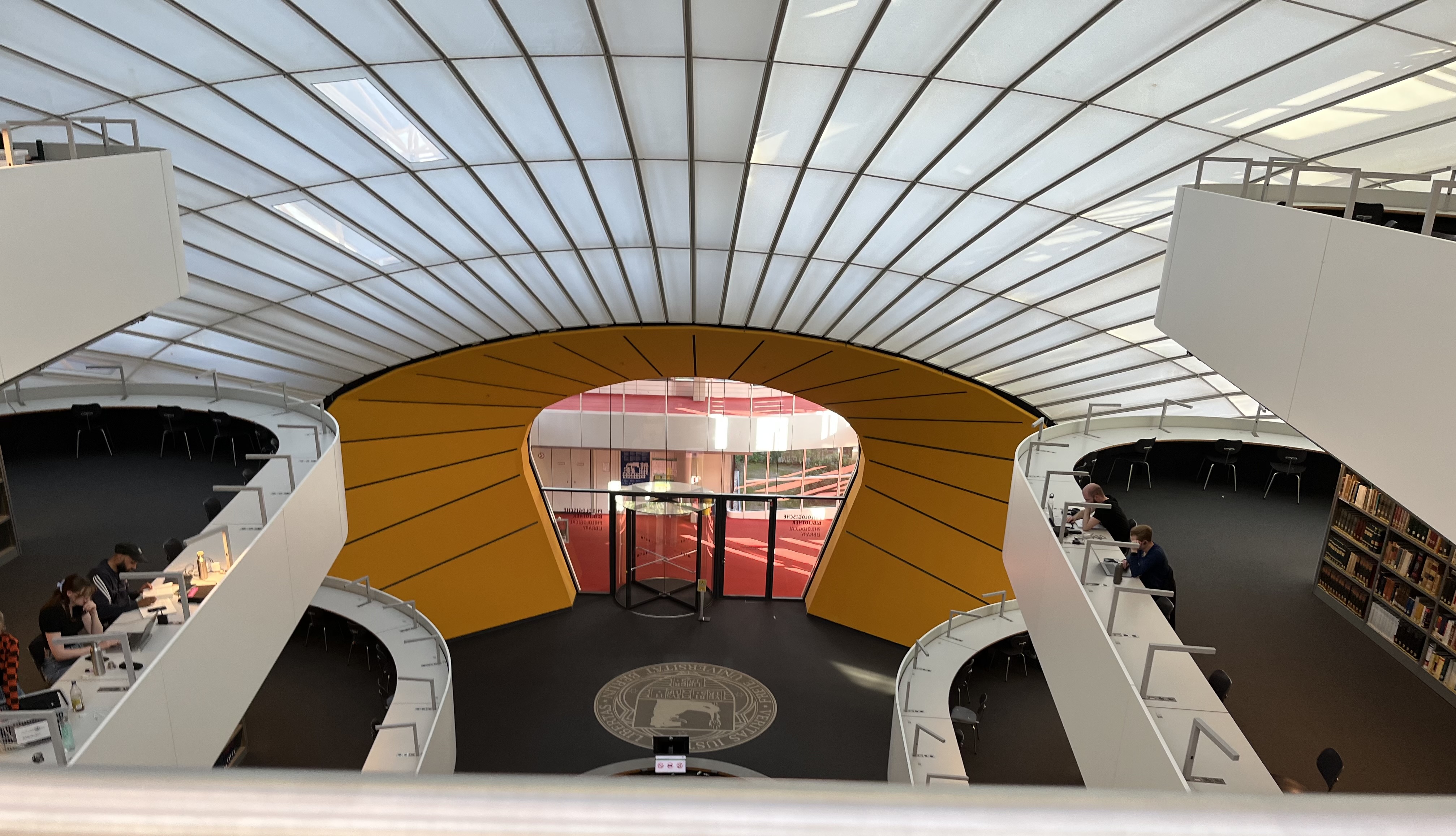
“Outside and inside form a dialectic of division,” writes the French Philosopher Gaston Bachelard. “Open closed open. That’s all we are,” posits the Israeli poet Yehuda Amichai in describing the life cycle of a person from the moment he enters the world to the moment he departs from it. In the seminar we shall examine the interior spaces as a theoretical and physical space. One of the particularities of designing interior spaces is that the architect operates within a given space that is usually predefined by the building envelope and various elements related to the building’s systems like the structural frame, electrical wiring, water, and other infrastructures. In the seminar, we will review a number of case studies by way of walking tours around the city of Berlin. We will try to expand our professional toolbox by analyzing and studying the phenomena that materialize within these spaces.
- Trainer/in: Jörg Gleiter
- Trainer/in: Katrin Ritter
- Trainer/in: Jörg Gleiter
- Trainer/in: Katrin Ritter
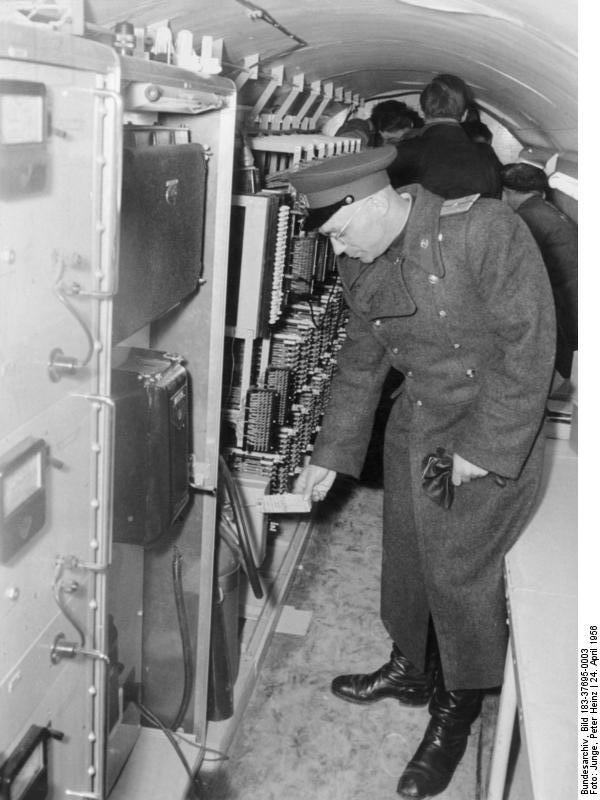
"MEDIA record, transmit, and process information – this is the most elementary definition of media. Media can include old-fashioned things like books, familiar things like the city and newer inventions like the computer." Friedrich Kittler, The City Is a Medium (1996)
Telephone lines, radio antennas, and supercomputers are all urban media — recorders, transmitters and processors of information that are literally „built-in“ to cities. For understanding such media and their „incorporation“ into urban fabrics, Berlin provides a particularly fertile historical sediment: the Berlin Radio Tower, for example, which both broadcasted radio waves across the city and served as a Nazi observation post; the Berlin Spy Tunnel that the CIA and MI6 dug to wiretap the communications of the Soviet Army; or the Field Station Berlin, a listening station on the Teufelsberg, where the NSA monitored, recorded, and even disrupted the GDRs radio traffic during the Cold War.
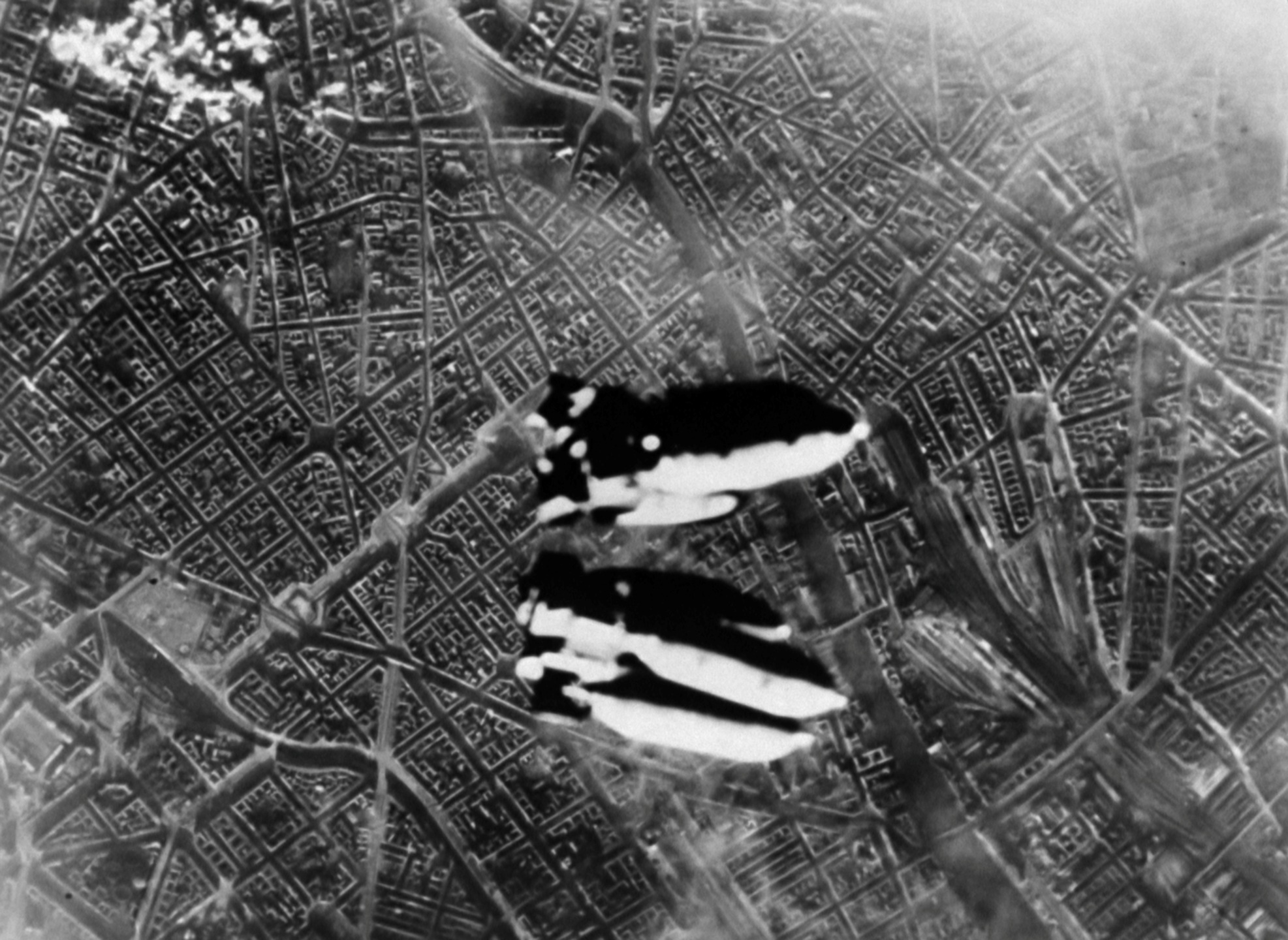
But urban media are more than a „built-in“, more than an „incorporated“ thing in a city. As the media theorist Friedrich Kittler postulated, the city itself is always already a medium. Nothing in Berlin shows this as clearly as the many holes left by the bombs and shells of World War II, still visible on many buildings to this day. Like photographic paper, buildings cities, environments in general, are carriers of the indices of history. Cities record, transmit and process information – its history.
In this international workshop, Berlin is explored from a media archaeological point of view. The aim is to excavate, identify and document Berlin’s urban media. An integral part of this endeavour is excursions; in seminars, theories and histories of urban media are introduced and discussed, accompanied by guest lectures.- Trainer/in: Jörg Gleiter
- Trainer/in: Katrin Ritter
Im Zentrum der Vorlesungsreihe stehen architekturtheoretische Grundbegriffe. Die Vorlesungen verstehen sich als Einführung in aktuelle konzeptuelle Begriffe, wie sie Grundlage für das Verständnis von Architektur sind. Nachwuchswissenschaftler*innen sprechen zu:
“Wandel” und „Verstrickung“ Dr. Lidia Gasperoni (TU Berlin)
„Forensik“ und „Daten“ Klaus Platzgummer (TU Berlin)
„Verantwortung“ und „Selbsthilfe“ Dr. Frederike Lausch (TU Darmstadt)
„Tektonik“ und „Erhabene“ Dr. Carsten Krohn
„Luft“ und „Körper“ Dr. Tim Altenhof (Univ. Innsbruck)
„Fragment“ und „Material“ Prof. Dr. Adria Daraban (TU Kaiserslautern)
- Trainer/in: Lidia Gasperoni
- Trainer/in: Jörg Gleiter
- Trainer/in: Tran Ngoc Anh Hoffmann
- Trainer/in: Katrin Ritter
Forensics is an epistemic practice situated within the material organizations of events — situated among traces: bones, documents, ruins, entire landscapes. The epistemic goal of forensic practitioners is to translate constellations of traces into evidence for the reconstruction of events — of crimes — to potentially make ‘things’ public.1 As sites where traces are inscribed or as traces as such, infrastructures, buildings, territories — architectures — often, even if only tacitly, unfold an agency in forensics.
The seminar focuses on a selection of historical and contemporary examples of architecture-related forensic practices, their sites of operation, the techniques involved, and their institutional or counter-institutional role, among other aspects. Reading discussions lead to different theories of knowledge and circle around concepts such as epistemic advantage, epistemic oppression, and epistemic injustice.
1 Forensics originates from Latin forensis ‘in open court, public’, from forum ‘what is out of doors’, originally denoting an enclosure surrounding a house.
- Trainer/in: Katrin Ritter
- Trainer/in: Jörg Gleiter
- Trainer/in: Katrin Ritter
- Trainer/in: Lina Toro