
Kurslar
The VLC_Summer School is
organized as a highly multidisciplinary course within the ENHANCE alliance and
is aimed at Master and Bachelor students from different disciplines (planning,
architecture, engineering, environmental sciences, social sciences, and other
fields involved in urban studies and planning).
The case study area in Valencia is a heterogeneous urban field between the city centre of Valencia and the port area. It includes an old village location that has become marginalised, a new development area, urban wastelands and the harbour edge. The main task will be to link these different settlement areas with each other and to design a qualified connection to the public harbour area as well as to the adjacent Mediterranean beach. During the week in Valencia, the participants will work on this task in mixed teams with students from the six participating European universities. In the online preparation phase from 14 August to 01 September, the participants from TU Berlin will work out the basics of the sectoral thematic area of housing development under the guidance of Christoph Wessling. The results of the preparatory phase will then be presented by the teams from the participating universities on the first day in Valencia.
The onsite phase of the course will be based on co-creation processes in which students, tutors, decision-makers, and representatives of civil society and the economic sector will collectively develop diagnoses, visions, and proposals for a set of strategic spatial and functional units in the city of Valencia.
Participants will develop their
knowledge and skills to improve urban sustainability through the design and
maximization of synergies between different urban infrastructures (green, blue,
social, mobility, housing, and energy).
The course will be delivered in a
hybrid mode (online + onsite). You can find all the details and the application
form at the following link:
https://enhanceuniversity.eu/vlc_summer-school/
At the TU Berlin the Summer School is primarily aimed at Master's students of Urban and Regional Planning and Urban Design. Bachelor students in the higher semesters and students of related subjects can also apply to participate. Participants will receive a flat-rate grant of 560 € for their travel and accommodation costs.
Dates of the course:
online: 14th August – 01st September 2023,
in Valencia: 04th – 09th September 2023The main organizing unit for the Summer School is the Universitat Politecnica de Valencia.
Professor at TU Berlin: Christoph Wessling.
Further information and application portal:
Contact: Christoph Wessling: wessling@tu-berlin.de / wessling@insar.de
- Trainer/in: Nurcan Canal
- Trainer/in: Matteo Holzmann
Der Kurs findet Mittwochs, von 8 bis 12 Uhr im EB 223 statt.
Kontakt für Fragen: matteo.holzmann@tu-berlin.de
- Trainer/in: Nurcan Canal
- Trainer/in: Martin Donner
- Trainer/in: August Emil Hermann Härtel
- Trainer/in: Matteo Holzmann
- Trainer/in: Jan Polivka
Der Kurs findet am Donnerstag, von 12:00 bis 14:00 Uhr, im EB 222 statt. Erster Termin ist am 20.04.2023.
Es ist Teil vom Modul "Bestandsentwicklung" (Wahlpflichtbereich), um die 6 ECTS zu haben, müsst ihr zwei Veranstaltungen des Moduls belegen.
Kontakt für Fragen: matteo.holzmann@tu-berlin.de
- Trainer/in: Nurcan Canal
- Trainer/in: Martin Donner
- Trainer/in: August Emil Hermann Härtel
- Trainer/in: Matteo Holzmann
- Trainer/in: Jan Polivka
Die Veranstaltung findet am Mittwoch, zwischen 12 und 14 Uhr statt. Erster Termin ist am 19.04.2023.
Der Kurs findet in Präsenz im EB 222 statt.
Kontakt für Fragen: haertel@tu-berlin.de
- Trainer/in: Nurcan Canal
- Trainer/in: Martin Donner
- Trainer/in: August Emil Hermann Härtel
- Trainer/in: Matteo Holzmann
- Trainer/in: Jan Polivka
Warsaw-Berlin-Workshop 2023
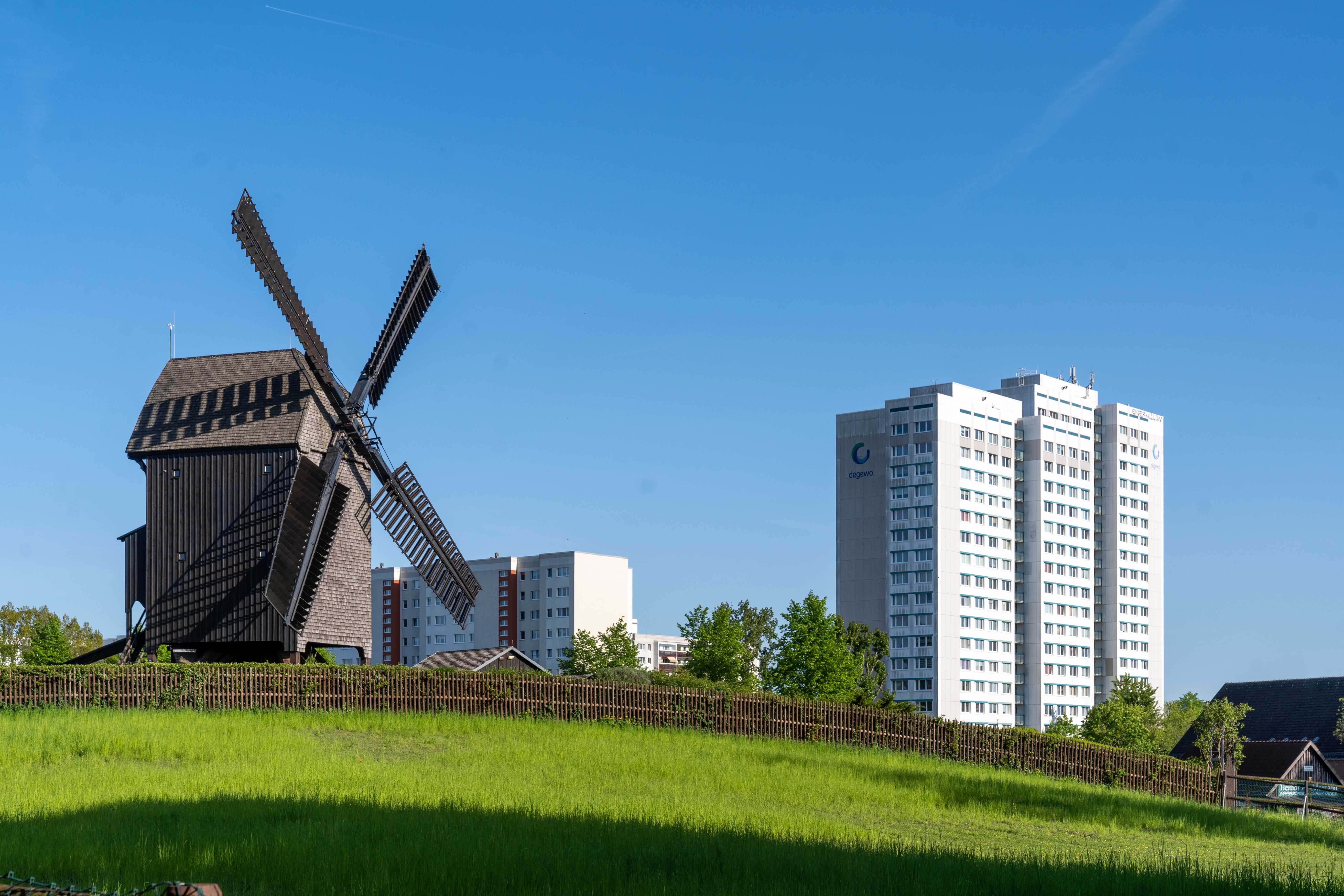
Villages in Berlin – relicts between past and future
Dipl.-Ing. Christian Kloss, Chair of Urban Renewal and Sustainable Development
Berlin is a city of villages - there are 62 former villages and 14 smaller rural settlements in Berlin, most of them outside the inner city within the S-Bahn ring. Many of these village cores are still recognizable in the urban structure and form special places within the urban fabric. Other former villages are, besides small relics, not recognizable anymore, as they were swallowed by the growing city and became part of the highly urbanized city core.
Although the village centers are special historic places, many of them do not
seem to be in the focus of planning considerations for a future development.
So, the focus of this year's Berlin-Warsaw-Workshop is on village centers. Alt-Mariendorf
and Alt-Friedrichsfelde were selected, both former villages cores have been
heavily deformed.
The task of the urban design workshop is to deal with one of them to create ideas, concepts and designs on different scales for the further development of the village centers. Guiding questions are: What functions and qualities do the village centers have today? What are starting points for a future development and what role do the relics of the village past play in this? What measures can be implemented to improve the quality of living and recreation in village centers?
The urban design workshop is offered in cooperation with the Architecture Faculty of Politechnika Warszawska (PT Warszawska) and is organized as a student exchange between Berlin and Warsaw. Urban planning/urban design students from TU Berlin will work closely with architecture students from PT Warszawska. Attending the excursion to Warsaw and the intensive workshop weeks is a compulsory requirement of the studio project.
The studio project will be held in English. Three phases structure it: In the initial phase, we will look at Berlin and analyse issues related to the task for the urban design workshop. In the main part of the project, we will work in mixed design teams (architects, planners + urbanists) in Berlin and Warsaw and develop concepts and design proposals. In the final phase, we will summarise the results and compile them in a report.
Block-dates:
· KICK-OFF-MEETING: THU, 20.4.23 14-17h (@TU Berlin, ISR, R 319)
· PROJECT DAY: THU, 4.5. 14-18h (@TU Berlin, ISR, R 309)
· WORKSHOP WEEK 1: SUN, 7.5. – SAT, 13.5. (IN BERLIN)
· WORKSHOP WEEK 2: SUN, 11.6. – SAT, 17.6. (IN WARSAW)
· SUMMARY SESSION: THU, 22.6. 14-18h (@TU Berlin, ISR, R 319)
· FINAL PRESENTATION: FRI, 14.7. (@TU Berlin, EB-Gebäude, R 222)
Contact:
Chair of Urban Planning and Built Environment Development (B7)
Institute for Urban and Regional Planning I TU Berlin
- Trainer/in: Martin Donner
- Trainer/in: August Emil Hermann Härtel
- Trainer/in: Matteo Holzmann
- Trainer/in: Christian Kloss