
Courses
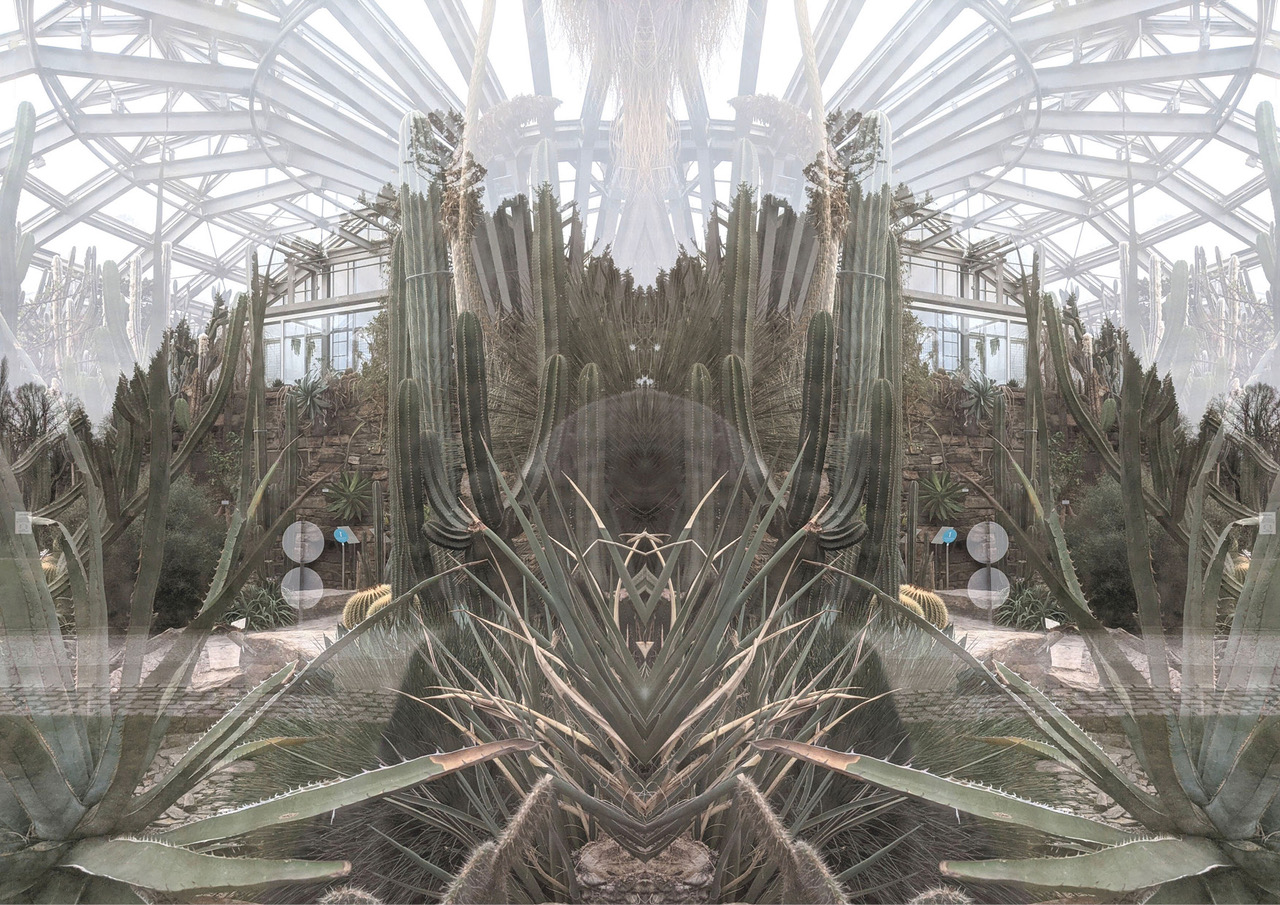
Cities and their institutions are changing to cope with society’s accelerated transformation and emerging needs in this time of socio-environmental crisis. The Berlin Botanical Gardens (Bo) presents an excellent case to study the intersection of Berlin’s cultural, green, and knowledge spaces and how they are re-figuring in relation to two such transformative processes at a planetary scale: human-induced climate change and decolonisation.
Berlin Botanical Gardens comprise a 43-hectare green enclave space in Berlin’s Steglitz-Zehlendorf, it is a publicly accessible archive and museum space storing and displaying a collection of 20,000 plant species, and it is a globally networked space of scientific knowledge production and circulation on botany and biodiversity research. Our initial research in collaboration with urban design and sociology students at TU Berlin (SoSe 2021) has revealed how urban governance, planning, and policy regimes such as heritage protection shape and restrict the capacity for such spaces to change. Using hybrid mapping and qualitative methods including semi-structured interviews, we looked at the contradictions that exist between, on one hand, practices of conservation which underpin the botanic gardens and urban planning more generally, and on the other, the desire to adapt to climate change and address coloniality which in subtle ways continues to shape how knowledge and space are co-produce at the gardens today.
Together in the seminar, we want to continue our research to look more closely at the relations and intersection of the three spaces that constitute Berlin Botanic Gardens: green space, cultural spaces, and spaces of knowledge, at multiple scales: organisational, urban, and trans-local and specifically at how borders are produced and transgressed by flows of human and nonhuman life. You will learn advanced sociospatial qualitative research methods and will be exposed to critical sociospatial theory being developed at TU Berlin’s SFB 1265 “Re-figuration of Spaces” to hone your analytical skills for application to urban research and what we call, critical spatial design.
Team: Jamie-Scott Baxter (jamiescottbaxter@me.com), Séverine Marguin (severine.marguin@tu-berlin.de), Jörg Stollmann
Tuesdays on site from 9:00 until 12:30 or 15:00.
First session on Tuesday 18th at BH-N 230
Address:
SFB 1265 “Re-figuration of Spaces”, Building BH-N, Ernst-Reuter-Platz 1, 10587 Berlin, Second floor, Room number: 230.
- Trainer/in: Jamie-Scott Baxter
- Trainer/in: Anna Nicola Heilgemeir
- Trainer/in: Severine Marguin
- Trainer/in: Louis Milan Speer
- Trainer/in: Anna Nicola Heilgemeir
- Trainer/in: Julia Köpper
- Trainer/in: Jörg Stollmann
Spatial Games
Auf dem Weg zu einer inklusiveren Planungspraxis
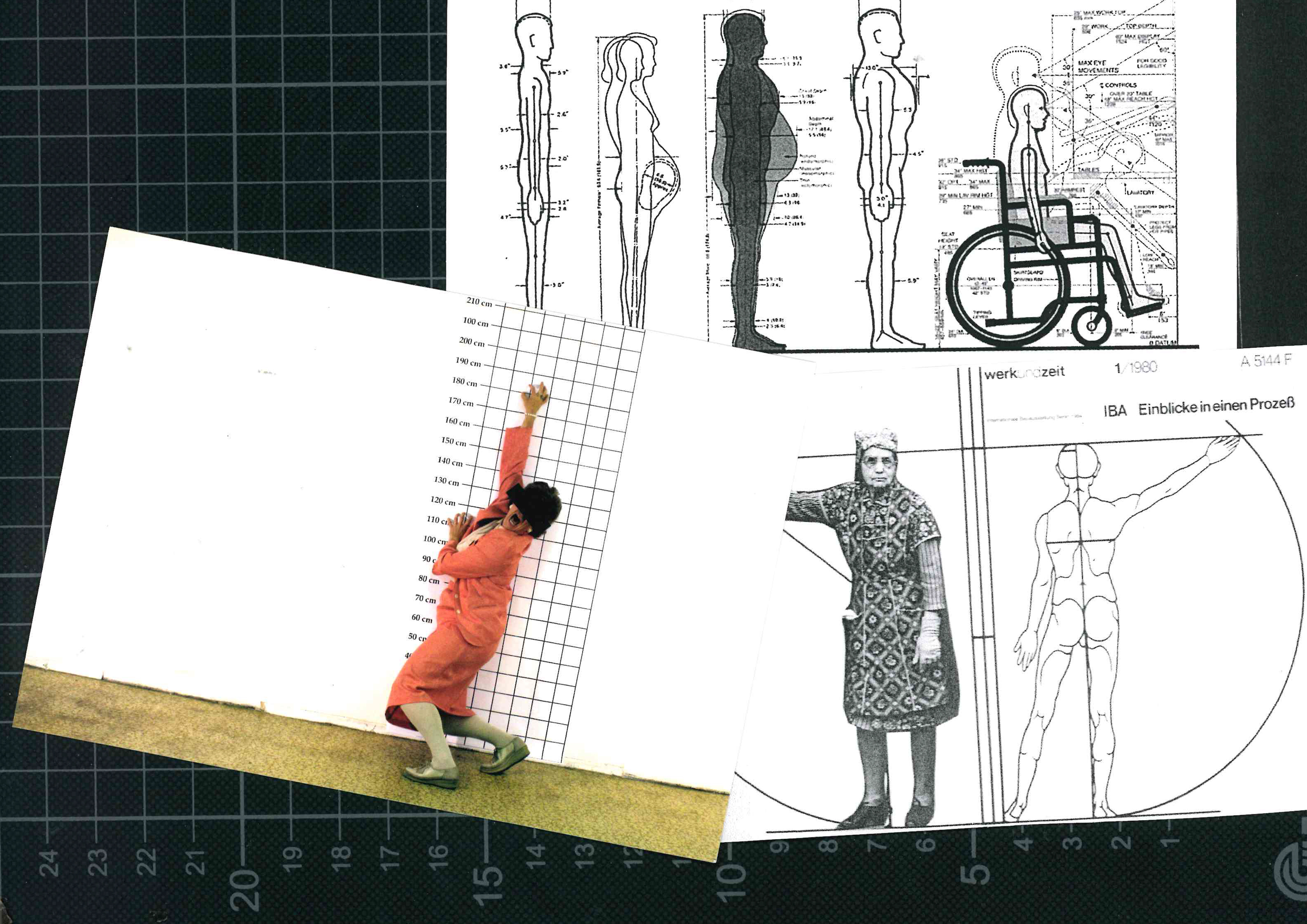
Im nächsten Sommer wird Berlin Gastgeber der Special Olympic World Games 2023, der weltweit inklusivsten Veranstaltung für Kinder und Erwachsene mit geistiger Behinderung. Die Eröffnungsfeier und die Veranstaltungen werden im Olympiapark Berlin stattfinden, einem Komplex aus Gebäuden, Sportanlagen und Parks, der für die Olympischen Spiele 1936 errichtet wurde. Die Anlage, die im Rahmen der politischen Propaganda für den "perfekten Menschen" entworfen wurde, spiegelt noch immer den exklusiven Geist der Vergangenheit wider. In der Nähe befindet sich ebenfalls Le Corbusiers Unité d'habitation von Berlin (Interbau 1957) mit der berühmten Fassadengravur des Modulor. Diesen Namen gab Le Corbusier dem geschätzten Durchschnittsmenschen, der als Maß aller Dinge dienen sollte. Das architektonische Gefüge um den Olympiapark mit seinen Achsen, Rastern, Ordnungen und Modulen kontrastiert stark mit der Idee der inklusiven Sportspiele, räumlich und gedanklich.
Im Studio "Spatial Games" werden wir diese
Kontraste als Ausgangspunkt nutzen. Die Idee ist nicht nur, inklusive
Sportanlagen zu entwerfen, die für die bevorstehenden Spiele notwendig sind
– mittels Theorien von Queering und Cripping wird
das Studio ebenfalls versuchen, diesen Bereich als repräsentativen Raum der
Inklusion neu zu gestalten.
Durch das Hinzufügen weiterer Schichten von Zugänglichkeit und Inklusivität werden wir versuchen, etablierte räumliche Standards und Normen, die oft von Architekt:innen und Planer:innen durchgesetzt werden, zu verschieben, zu brechen und zu demontieren.
Im Studio werden wir versuchen, Werkzeuge und Methoden zu entwickeln und eine andere Rolle als die des "Architekten" zu übernehmen.
Spatial Games
Towards a More Inclusive Planning
Next summer Berlin will host the Special Olympic World Games 2023, the world's most inclusive event for children and adults with intellectual disabilities. The opening ceremony and events will take a place at the Olympiapark Berlin, a complex of buildings, sports facilities and parks built for the World Olympic Games in 1936. Designed with a “perfect man” in mind as part of political propaganda, the space still reflects the exclusive spirit of the past. Nearby is also Le Corbusier’s Unité d'habitation of Berlin (Interbau 1957) with its famous facade engraving of Modular, the name he gave to an estimated average man, to be used at the measure of all things. The architectural assemblage around the Olympiapark, with its axes, grids, order and modules contrasts strongly with idea of inclusive sports games, spatially and intellectually.
In the studio “Spatial Games” we will use these contrasts as a starting point. The idea is not only to design inclusive sports facilities necessary for the upcoming games, but through theories of queering and cripping, the studio will try to re-envision this area as a representative space of inclusion. By adding further layers of accessibility and inclusivity, we will try to shift, break, and dismantle established spatial standards and norms, that often are enforced by architects and planners. In the studio we will try to develop tools and methods, and take on another role than that of “The Architect”.
- Trainer/in: Anna Edith Barwanietz
- Trainer/in: Veljko Markovic
- Trainer/in: Jörg Stollmann