
Kurser
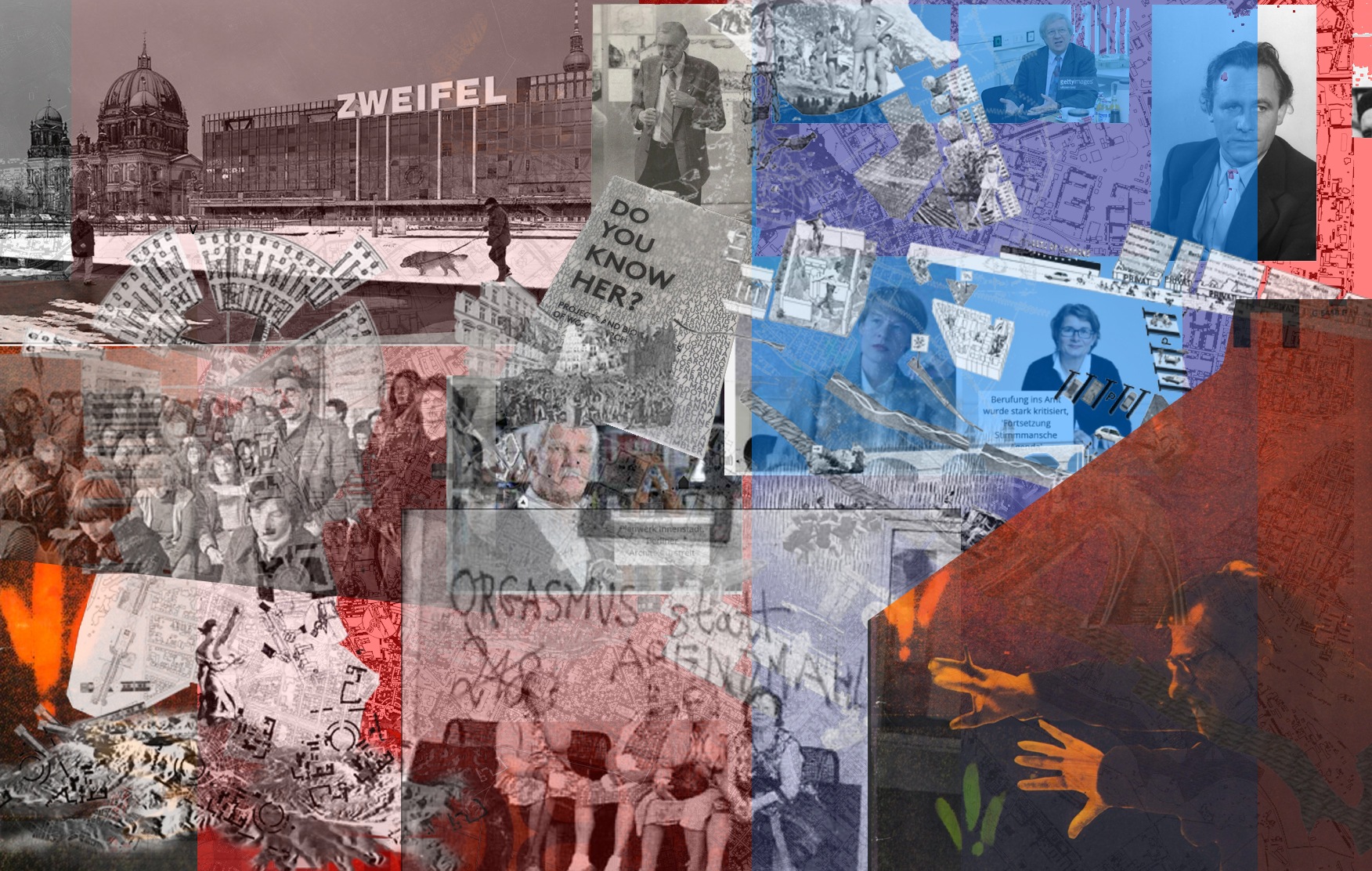
For some years now, we have been experiencing a rising wave of urban movements in Berlin with demands for a common good-oriented, user-driven and social urban development. Practices and discourses are diverse, oscillating between bottom up and top down, whereby planners have to constantly readjust and justify their role. In the history of Berlin, such movements have developed in various constellations of power in waves that flared up and subsided again. The results for urban development have been as diverse in their constellations of actors, goals, programmes and typologies as they have been in their scope, reproducibility and impact on the present.
We want to examine the city of Berlin and the backgrounds of the types and prototypes that emerged from visible and invisible social negotiations. We want to understand which operating systems in terms of common good values, power relations, narratives, legal instruments are supporting them. How and with what motivation did planners position themselves in them? How and by what means did they breathe, feel, live, translate, amplify and attempt to materialise the voices of neighbourhoods, interest groups and other marginalised communities? And with which methods did they vision, protest, support, moderate, act politically?
By illuminating a multi-voiced dialogue between municipal public services and self-organised, bottom-up urban design over the last 100 years, the seminar aims to make the concept of a socially oriented planning practice tangible in its contradictions and difficulties.
The result is a narrative, a pool of knowledge, a map or matrix, perhaps a kind of excavation for the future in an increasingly neo-conservative-liberal urban development…
- Trainer/in: Anna Nicola Heilgemeir
MA Studio Städtebau I+II
SPATIAL COMMONS (14) – ENTANGLED COMMUNITIES OSTBAHNHOF
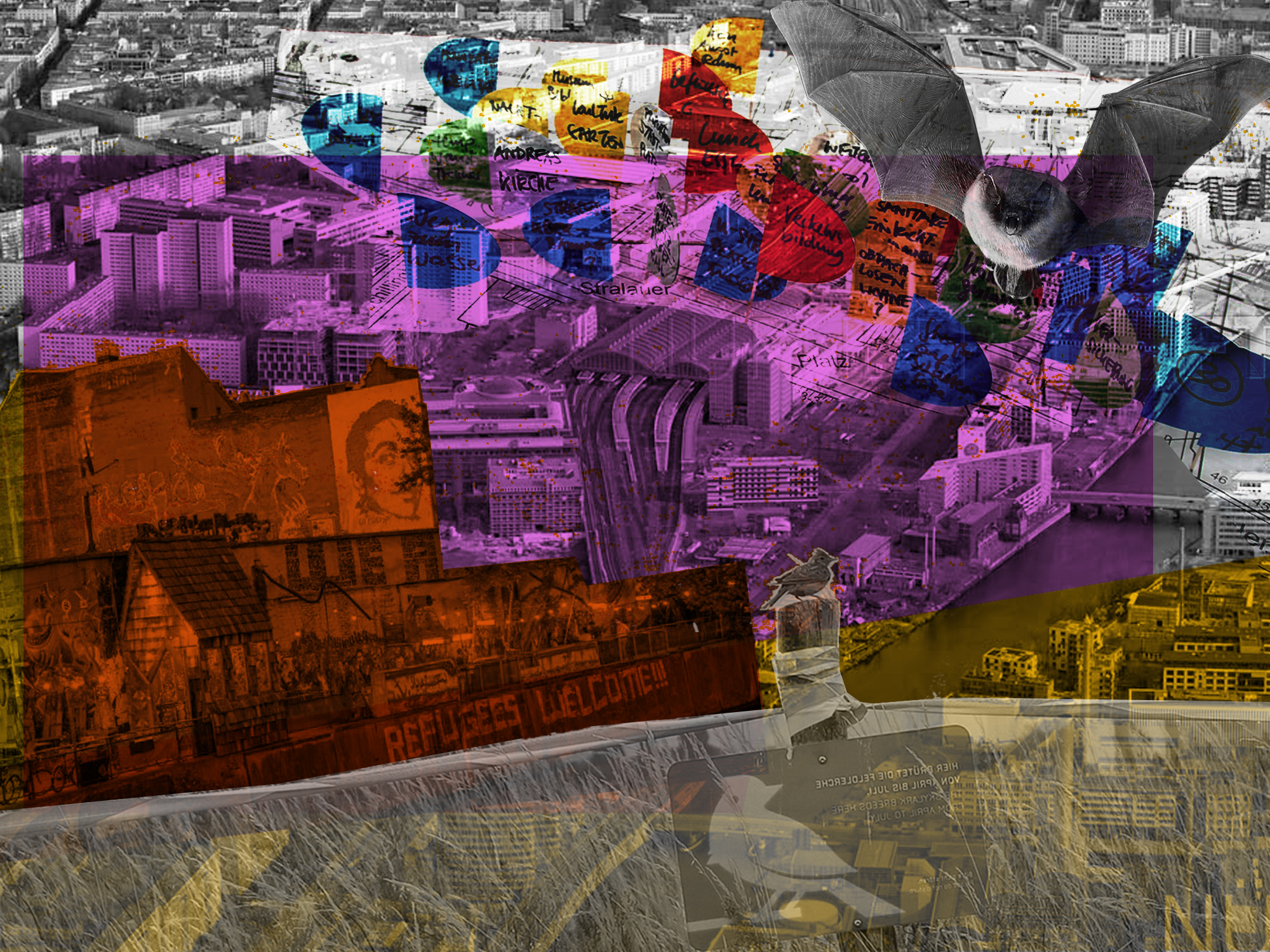
The area around Ostbahnhof between Spree and Karl-Marx-Allee is a patchwork of different urban fragments. Due to various current plans, major urban development changes are expected around the Ostbahnhof in the coming years.The design studio 'Entangled Communities Ostbahnhof' is looking for visions of a new neighbourhood oriented towards the common good and mixed uses. To achieve this we will explore the interests of existing actors and possible future communities in various scenarios in order to facilitate a community-oriented and empowering planning and design. The community concept will be expanded by a more-than-human urbanism perspective and deepened in the accompanying PiV. The objective is to include non-human actors who live on site, to understand and to incorporate their needs into the design concepts.
We ask what qualities on a spatial, organisational, ecological, economic and social level are needed by the different human and non-human actors and how these can be combined in a vision for a neighbourhood around the Ostbahnhof?
According to the principle "No Design without Community - No Community without Design", the designs will serve as a base to discuss a further development process with the district and interested actors and communities. We will exchange ideas with LokalBau and the Bezirksamt F'Hain/X'Berg and our designs will build on and challenge their envisaged scenarios for the area.
The PiV focusses on multi-species cohabitation in order to apply it in analysis and design. It will be conducted by architect Jamie Baxter (BUA) and urban ecologist Dr. Tanja Straka (Institute for Ecology). The Studio and PiV are held in English. The PiV is obligatory for the participants of the studio.
- Trainer/in: Jamie-Scott Baxter
- Trainer/in: Anna Nicola Heilgemeir
- Trainer/in: Julia Köpper
- Trainer/in: Jörg Stollmann