
Kurslar
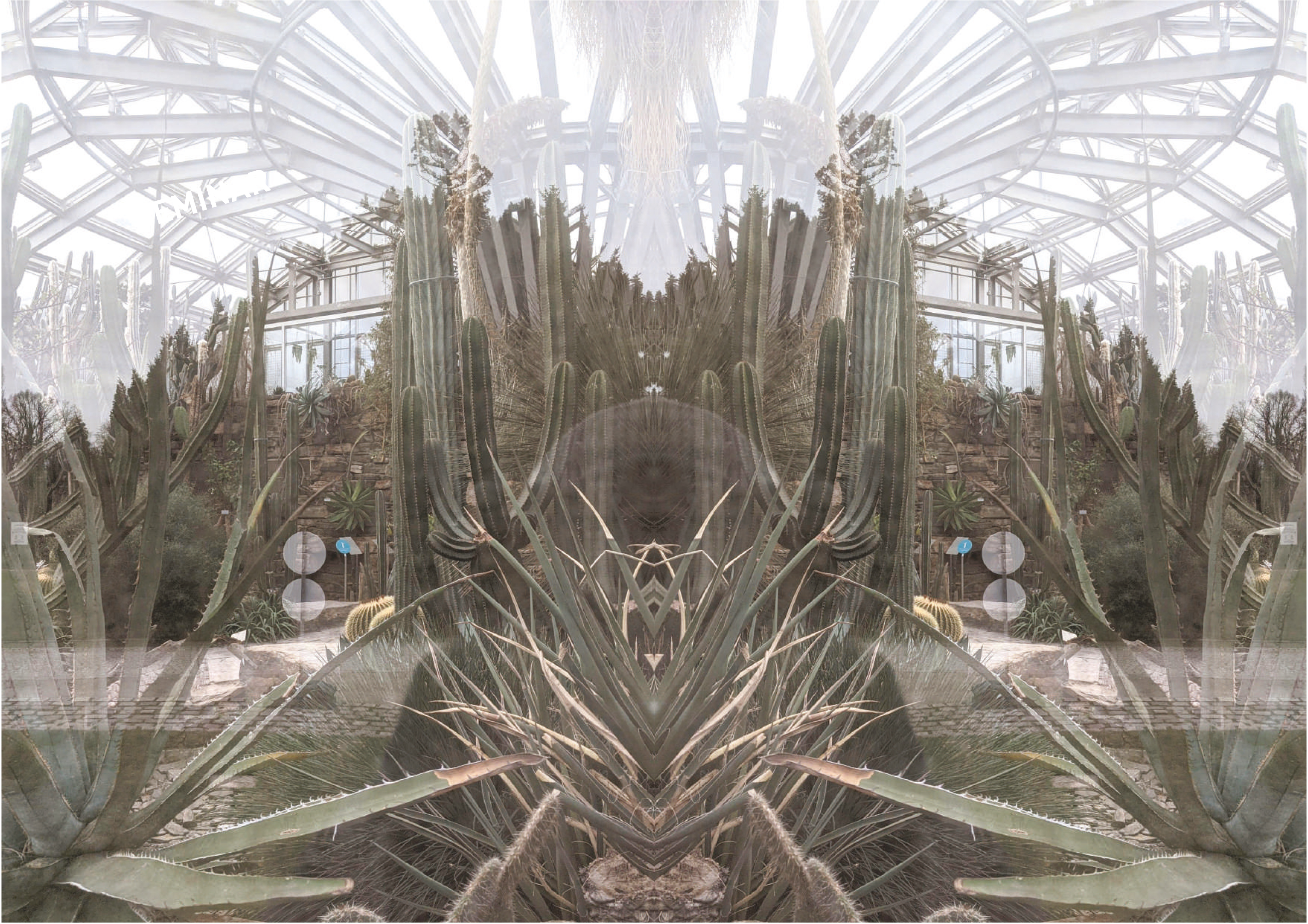
The seminar, part of an ongoing working group hosted at the SFB 1265 “Re-Figuration of Spaces”, aims to methodically and practically examine mapping methods towards a critical, creative and reflexive approach to socio-spatial research and design. We will research and render visible the trans-local spatial assemblages, diverse actors and material infrastructures at work in the co-production of knowledge connected to the Botanical Garden and Museum Berlin (BGBM). The project starts from the hypothesis that scientific knowledge is co-produced between scientists and non-scientists and that this process of hybrid knowledge production structures trans-local spatial assemblages that traverse site, city and national boundaries, involving all kinds of human and non-human actors.
Museums and research institutions are changing to cope with the accelerated transformation and emerging needs of society in this time of socio-environmental crisis. Historically, institutions like the BGBM have produced and transferred valuable knowledge on our naturalcultural environment to society. However, with these changing roles new ways of co-producing knowledge with society are being presented. During the seminar, we will start by mapping specific ‘sites’ associated with the production, dissemination and transfer of knowledge at the Botanical Gardens (the museum, greenhouses, gardens, data banks, labs etc.). We will examine how, by whom and for what purpose knowledge is produced and arranged territorially. In the second step, we will consider how other spatial figures (e.g. networks and trajectories) come into view as knowledge circulates, transforms and transgresses territorial boundaries, drawing-in multiple other spaces and contexts translocally. In the third step, we ask, how these processes are constitutive of other, new spaces.
For example, we will begin by considering how cacti are spatially arranged, where they are placed in relation to other species, how they arrived at the BGBM, which other sites and places they travelled through, and under which conditions? How are they classified and categorized? What atmosphere needs to be reproduced to allow them to grow in northern Europe and for what purpose? And, what role do scientific and non-scientific networks play in what is understood about cacti, how do cacti transform as they circulate through and between such networks, how and where are these networks connected? What material infrastructures, such as soil, labs, flowerbeds, exhibitions, home gardens, nurseries, shops etc. facilitate these circulations and transformations? Are there specific trajectories which are more important than others in the flows of information, knowledge and power?
Methodologically, we will conduct site visits, interviews, photography, surveying and drawing to collect data on sites at the BGBM. We will then discuss, develop and apply what we call the ‘Hybrid Mapping’ methodology, a mapping approach combining sociological and architectural research perspectives.
- Trainer/in: Jamie-Scott Baxter
- Trainer/in: Ruth Theresa Jung
- Trainer/in: Jessica Lüttke
- Trainer/in: Severine Marguin
- Trainer/in: Sophie Mélix
- Trainer/in: Jörg Stollmann
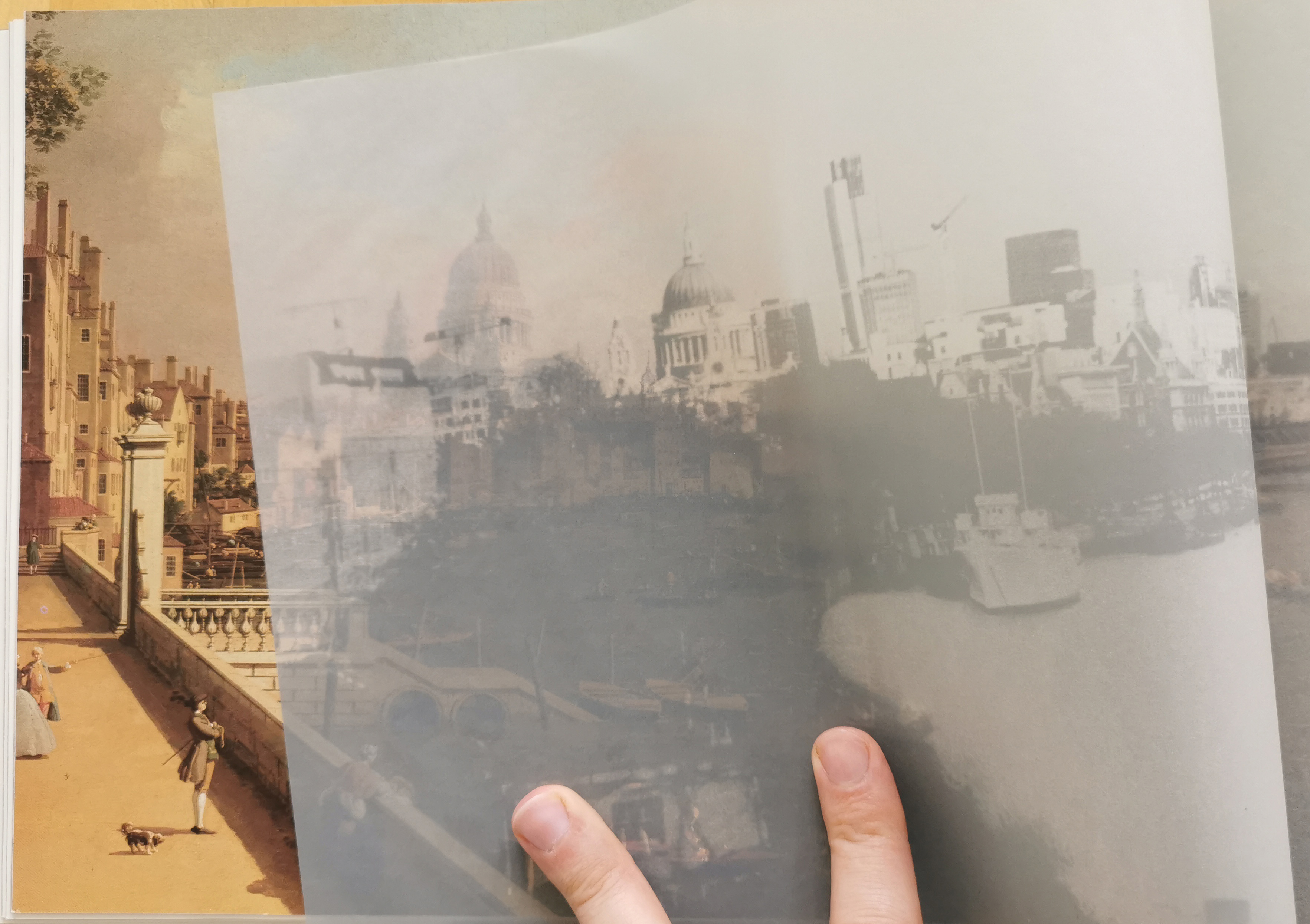
The image you see here is taken from the book: A Vision of Britain: A Personal View of Architecture (1989), written by Charles, Prince of Wales. The page is a full bleed image taken from an 18th century oil painting of London by Canaletto, covered by the consecutive page; a semi-transparent image of a modern London from the 1990s. With this literal covering of a romantic painting with a contemporary image, Prince Charles is making an argument, or even a critique on modern architecture. He later published ten key principals on how to build cities in the future, which he then managed to apply in the building of his own town know as Poundbury.
In history, Prince Charles isn’t the only individual in a position of power to express an idea about how the future urban environment should look. Several public figures: members of royal families, successful businessmen, entrepreneurs or popular artists, have at the peak of their success, fame, admiration and power proposed future visions of cities. To design a city is in this vein also to project ideas about how its citizens' everyday life should be lived.
The seminar MyCity® will explore the relationship between a) media, as a crucial tool that mediates influence of the individual and influence of the mass; b) that individual itself, and c) the vision of the urban environment – an imaginary or real place that synthesizes persona spacial ideas that triggered collective imagination.
Today, we live in a society that lets common future visions diminish, while a growing number of wealthy individuals with certain ambitions are free to use their influence and imagination in politics that are supposed to govern the many.
Can My City be also everyone's City?
- Trainer/in: Anna Nicola Heilgemeir
- Trainer/in: Julia Köpper
- Trainer/in: Jessica Lüttke
- Trainer/in: Veljko Markovic
- Trainer/in: Frederik Springer
- Trainer/in: Jörg Stollmann
- Trainer/in: Anna Nicola Heilgemeir
- Trainer/in: Julia Köpper
- Trainer/in: Jessica Lüttke
- Trainer/in: Veljko Markovic
- Trainer/in: Claudia Seldin
- Trainer/in: Juliana Soares Gomes Canedo
- Trainer/in: Jörg Stollmann