
Cursos
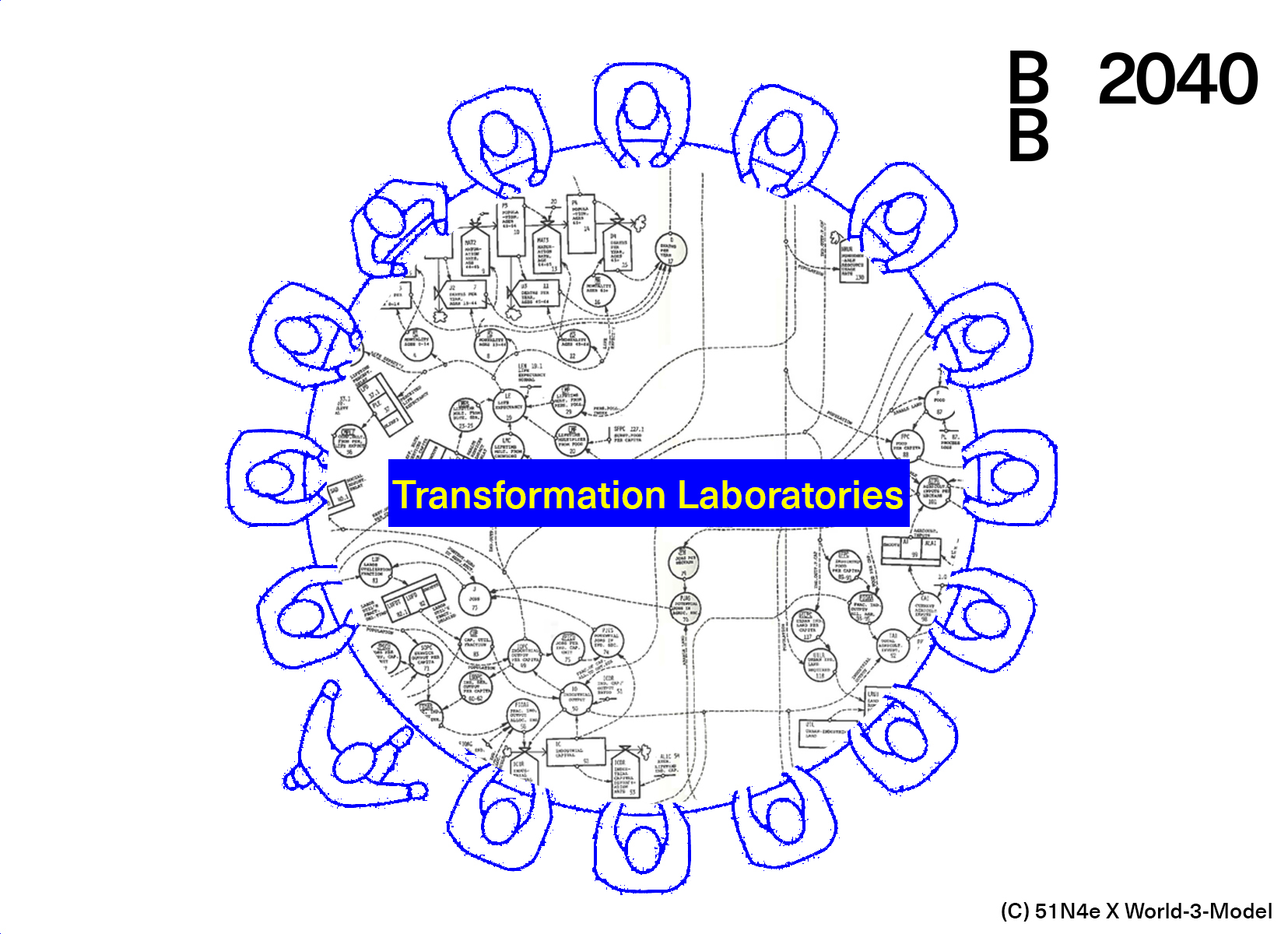
To make future living in the region of Berlin-Brandenburg resilient, inclusive, equitable and ecologically sustainable will require a number of vital systemic changes and “infrastructural turns”. Their materialization will — in all probability — visibly reshape territories, towns and streets and massively influence our current practices of land use and ways to perceive it. Many different realities, standpoints and attitudes will collide, strong compromises will have to be made and entirely new coalitions will be formed along the way. What are the infrastructures that we will need to facilitate and govern these processes?
This course invites students to design a community-based, long-term, future-oriented, scenario-planning process to be held with stakeholders from Berlin-Brandenburg. The studio will begin with a close look at our neighboring countries in the Euro-Delta and the institutions they developed in order to project and plan long-term spatial changes on all scales of the participatory ladder. We then move on to understand theory and practice of scenario tools and their potential for urban design. Together with our partner municipality, students will survey an exemplary situation to build an understanding of ‘Infrastructure’ as an existing instrumental landscape of essential resources and spatial-material structures, actors, processes and services (systemic knowledge) which will inform the preparation for scenario-building forecasting and backcasting workshops with local stakeholders. In a last step, we will evaluate methods and impacts in order to define an applicable/scalable “BB Transformation Laboratory Design”. The studio progress will be partially exhibited at the “Wissensstadt-Ausstellung” in front of the Rote Rathaus in Summer 2021 and inform the concluding BB2040 Assembly* Conference.
- Trainer/in: David Bauer
- Trainer/in: Philipp Misselwitz
- Trainer/in: Veit Laszlo Vogel
Spatial arrangements of housing, care work and urban social infrastructure co-constitute the socio-spatial patterns of global supply chain capitalism. This seminar explores the spatial organization of care, social reproduction, and the division(s) of labour it embodies, as integral aspects of industrial and post-industrial urbanization in different geographic contexts across the planet. Readings will introduce current debates on care economies and (spatial) divisions of labour in geography, social and architectural studies including critical queer and feminist approaches. In research-based analytical drawing or mapping projects, seminar participants are invited to explore diverse architectures and urban spatial typologies performing as infrastructures for care work and social reproduction on different scales, including trans-local practices and networks.
By questioning common spatial arrangements of production and reproduction in a relational, planetary perspective, as well as underlying assumptions about race and gender, the course aims to contribute to a critical assessment of dominant architectural and urban planning principles. We encourage research into architectural and urban interventions with the potential to offer alternatives, to counter and reprogram unsustainable and injust mechanisms of exploitation, and to set care and due diligence in primary focus.
Seminar projects will include:
- Explorative research of micro- and macro-geographies of re:productive labour/care work
-
Analysis of specific typologies (architectures, urban spaces, networks)
by means of architectural drawing, mapping and a final written report
- Development of visual and narrative formats (podcast) for a website presentation
Weekly reading assignments are essential in preparation of the sessions and mandatory for all participants.
- Trainer/in: Christian Georg Haid
Um die versprochene Klimaneutralität in der Region Berlin-Brandenburg zu erreichen und diesen Wandel inklusiv, gerecht und ökologisch nachhaltig zu gestalten müssen urbane Infrastrukturen radikal transformiert werden.
Viele derzeit noch bestehende Systeme der autogerechten Mobilität oder der fossilen Energiegewinnung werden obsolet und eröffnen so einmalige Chancen für eine architektonische und städtebauliche Neuinterpretation. Während Infrastrukturen derzeit oft urbane Landschaften zerschneiden entstehen so neue Chancen für verbindende infrastrukturelle Alternativen, programmatische Vielfalt, Inklusion und gestalterische Qualitäten.
Das Bachelor-Thesis Studio entwickelt Transformationsszenarien für ausgewählte Infrastruktur-geprägte Orte - den derzeit von Vattenfall genutzten Energiekraftwerken entlang des Berliner Stadtrings (A100). Studierende spekulieren über Veränderungs- und Re-Urbanisierungsszenarien der Orte im Jahr 2040.
Das Bachelor-Thesis
Studio ist Teil der von der Habitat Unit und No-Image initiierten Forschungs-,
Lehr- und Diskursplattform bb2040.de die Transformationsprozesse in
BerlinBrandenburg aus der Perspektive von Infrastrukturen untersucht. Wir laden
Studenten, Kollegen, Mitarbeiter und Gäste ein, ihr Wissen, ihre Ideen und
Spekulationen darüber einzubringen, wie sich Infrastrukturen als "glue of
urbanisation" (Pierre Bélanger) angesichts globaler und lokaler
Herausforderungen verändern und neu konfigurieren (müssen), um für eine
lebenswerte Zukunft im Jahr #2040 zu sorgen. Das Projekt wird von der Robert
Bosch Stiftung gefördert.
- Trainer/in: Philipp Misselwitz