
Cursos
"Kein Platz Meer"? – Wieviel Klima- und Naturschutz sowie andere Nutzungen vertragen sich auf See?
Projektbetreuung
| Johann Köppel EB 221 |
Alina Langkau EB 214 |
|
|---|---|---|
| Kontakt | johann.koeppel@tu-berlin.de | alina.langkau@campus.tu-berlin.de |
| Sprechzeiten | nach Vereinbarung | nach Vereinbarung |
- Trainer/in: Gesa Geißler
- Trainer/in: Johann Köppel
- Trainer/in: Camie Joe Marlys Lorenze
- Trainer/in: Franziska Jamie Stein
- Trainer/in: Juliane Biehl
- Trainer/in: Gesa Geißler
- Trainer/in: Johann Köppel
- Trainer/in: Juliane Biehl
- Trainer/in: Gesa Geißler
- Trainer/in: Johann Köppel
- Trainer/in: Juliane Biehl
- Trainer/in: Gesa Geißler
- Trainer/in: Johann Köppel
- Trainer/in: Johann Köppel
- Trainer/in: Julia Neugebauer
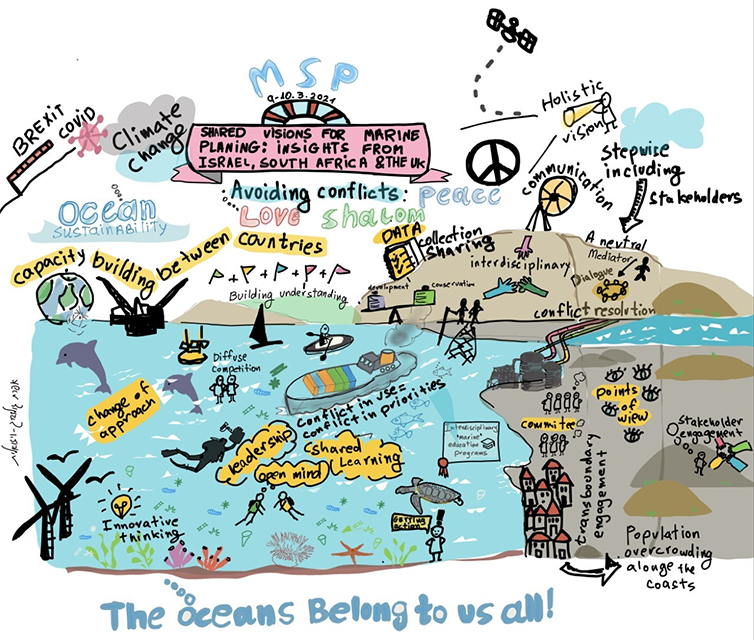
"No space left at sea" - this was the title of a recent media coverage of the ongoing marine spatial planning process for the North Sea and Baltic Sea. Whether it’s marine ecosystem reserves or industries that are part of the blue economy‘ such as shipping, fishing, aquaculture, pipelines and cables, and extensive offshore wind power facilities, all are vying for more space on the open water. Now factor in European and German climate and environmental protection goals and emerging technologies such as hydrogen generation, and it becomes difficult to prioritize and balance uses on an already burdened seascape. To what extent can a desired compromise eventually succeed?
With the ecosystem-based capacity of our seas at stake, all European states with access to the sea must complete marine spatial plans (MSPs) by 2021. This puts environmental planning in an integral position as it finds itself in the middle of these efforts via strategic environmental assessment.
The aim of the study project is to critically analyse
marine spatial planning approaches, worldwide:
(1)
How does marine (environmental) planning work?
(2)
Who is involved? Which interests govern the seas?
(3)
To what extent should marine ecosystems be exploited?
- Trainer/in: Juliane Biehl
- Trainer/in: Gesa Geißler
- Trainer/in: Johann Köppel